Olivia Dean vs Addison Rae – Minimal vs Maximal Aesthetic Divide
Pop culture can be defined by the push and pull of competing trends within each era. You are either drawn to the charm of emotive ballads or the magnetism of hyper-pop; prefer the classics of Taylor Swift or the club culture of Charli XCX; gravitate toward Netflix blockbusters or the niche world of ‘film-bro’, auteur-driven cinema. These dichotomies are a part of a larger pattern of cultural taste formed by continuous debates around artistic legitimacy.
It is no surprise, then, that the current conversation centers on a competition between Olivia Dean, a British singer-songwriter famous for her soulful musicality, and Addison Rae, an American social media personality and emerging pop artist who rose to fame on TikTok. However, this discussion is simply the latest iteration of how each generation negotiates its definitions of artistry and “coolness.”
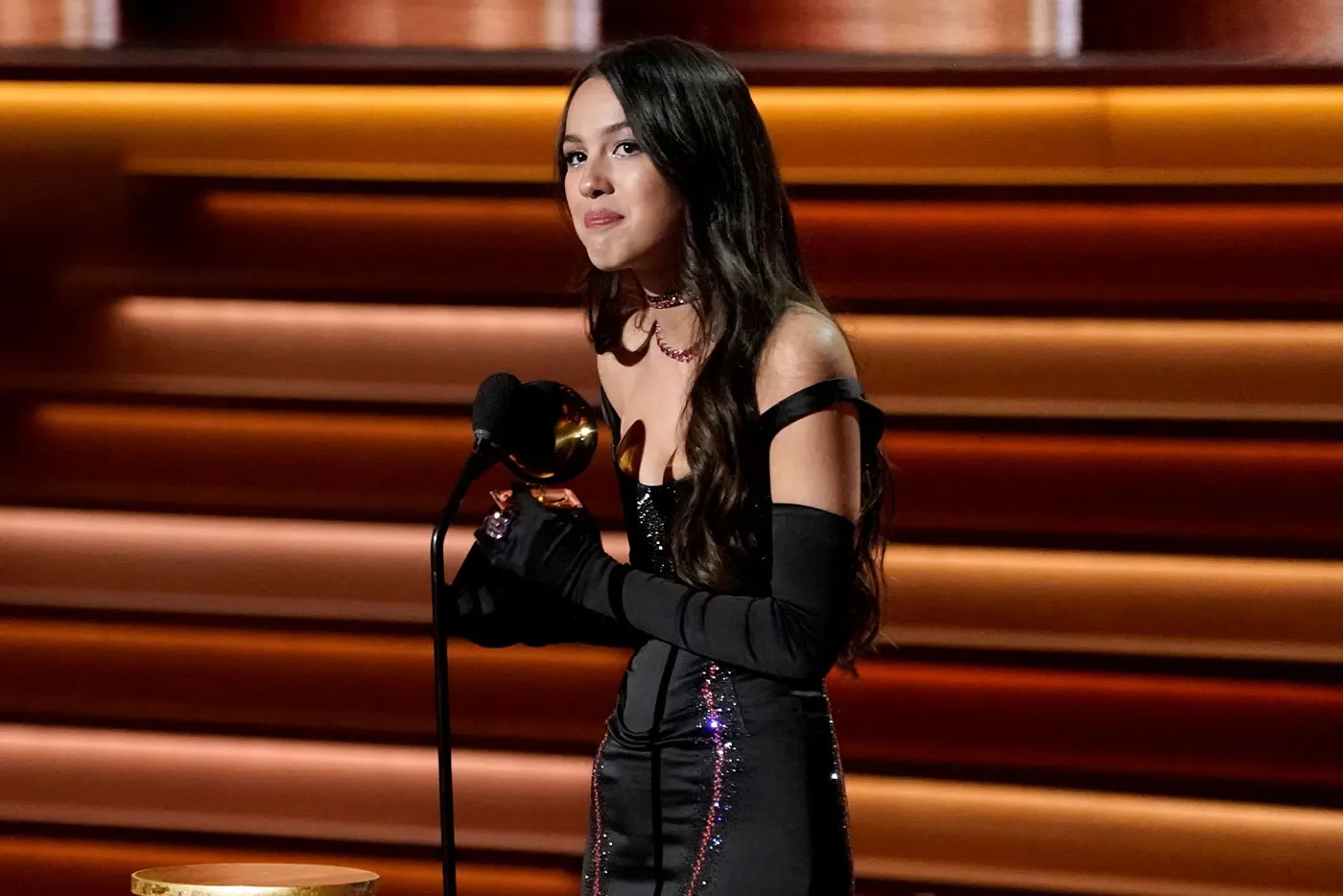
Courtesy of Chris Pizzelo
Grammy’s Best New Artist
The Grammy’s Best New Artist award has a longstanding history of propelling newcomers toward lasting success, or, in some cases, failing to do so. It’s a battleground wherein legitimacy is debated within the music industry, often reflecting industry politics. Each year’s winner provokes controversy about what qualifies as the “right” pick and which images, personas, or sounds deserve to be nurtured. Olivia Rodrigo, who won in 2022, embodied this by initiating the return of confessional ballads in the mainstream.

Yet, the category is also notorious for its so-called “curse.” Many past winners have faded from the charts after their initial breakthrough. Although some, despite their loss, have gone on to achieve far greater success than those who received the award. Kendrick Lamar, for example, lost out on the Best New Artist in 2014 to Macklemore, but has since surpassed the typical expectations for the category. Since his loss, he has earned 66 nominations and 27 wins.
Should we, then, endow the Grammys as the indicator for enduring talent, or does it sometimes overlook future superstars?
This year, debate circulated around Olivia Dean and Addison Rae. Dean lit up the Grammys in a cozy orange stage embellished with reflective orange patterns, wearing a shimmering red mid-thigh dress as she performed her latest hit, “Man I Need.” Her R&B groove, accompanied by a live band, created an atmosphere reminiscent of classic jazz clubs. Rae, on the other hand, arrived standing in the back of a truck, performing “Fame is a Gun.” Dressed in a sequined hot purple coat that she later removed to reveal also a purple two-piece set, Rae’s performance attracted the audience with intense choreography.
Dean hadn’t even caught a glimpse of herself in her backdrop, and Rae hadn’t put her coat back on before the audience, both online and off, had scattered their two cents about the performance and braced themselves for the final results.
And the Grammy Goes To…
Predictable to some, yet a shock to others, Dean ultimately took home the Best New Artist award. Her song “So Easy To Fall in Love” soared up the charts, peaking at No. 13 and earning critical acclaim. Her sophomore album, The Art of Loving, dominated the ARIA Albums Chart. These achievements alone made her win seem almost inevitable, especially when compared to Rae’s debut album, Addison, which only reached No. 4 on the Billboard 200.
On social media, the discourse told a different story. Fans sparred over Dean’s artistic merit on X (f.k.a Twitter). One comment claimed, “Olivia Dean lowkey has no key characteristics to her sound or persona,” while another retorted, “Let’s fish for Olivia Dean’s talent.”
Meanwhile, Rae’s supporters were quick to defend her side, celebrating her bold embrace of ‘girly pop’ and campy, maximalist style. Many praised her for challenging boundaries, calling her performance “refreshing” compared to what they saw in Dean’s more traditional, acoustic approach. The phrase “the girls that get it, get it. Those that don’t are named Olivia Dean” circulated widely, expressing the divide between the two fan bases.
This split in fan enthusiasm underlines how audiences identify with artists. The public becomes less concerned with choosing the most deserving newcomer and instead is drawn to artists whose image matches the interests of their own niche subculture. In this way, the conversation goes beyond constructive competition, showing how contemporary music fandom is shaped by the search for personal alignment.

Addison Rae/ Courtesy of Instagram
You Either Get It, or You Don’t
Social media users, especially the leading generation of Gen Z, are rejecting the Grammys’ newer path of awarding artists based on algorithms. They, instead, push for artists like Rae, whose aesthetics mirror their own. The debate inverts from who sings better or sells more records to which artist embodies the identity of the generation.
Essentially, this could be explained by categorizing each artist under minimalism versus maximalism. Minimalism stresses timelessness. Artists like Dean exemplify this model, approaching both sound and presentation with subtlety. She rejects flashy trends and focuses on songwriting and nuanced aesthetics to stimulate intimacy amongst listeners. In contrast, Maximalism joins forces with extravagance, as seen in Rae’s methodology. Rae demonstrates digital fluency, opting for more outlandish staging choices and expecting audiences to pick up on the irony. This strategy creates the familiar, “you either get it or you don’t”, a kind of aesthetic gatekeeping, where certain trends resonate with some viewers while leaving others out.

The performance becomes akin to an exclusive party. You’re either in, or you’re not. This raises the inevitable question: do audiences simply want to get into the club, or do they genuinely have issues with Dean’s abilities?
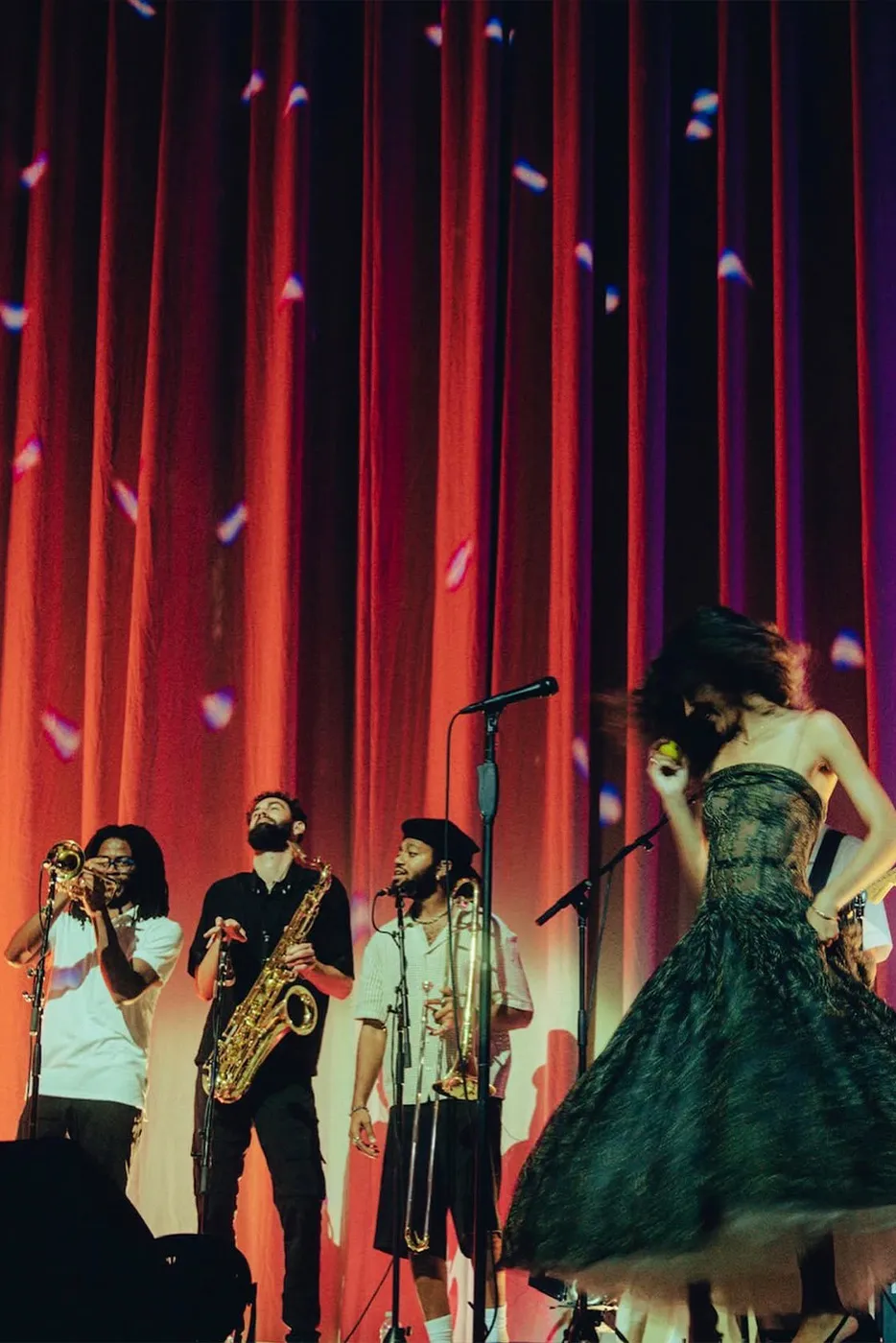
Olivia Dean/ Courtesy of Instagram
Whatever Happened to Silly Love Songs?
Other than her minimal take on pop trends, Dean is also scrutinized through references to her heteronormativity and “trad wife” agenda, with critics quick to highlight how her lyrics depict traditional ideas of romance and domesticity. Some even go as far as to dismiss her tracks as “AI slop,” a jab that speaks to allegations of basic songwriting. Despite this, or perhaps because of this scrutiny, tracks such as “So Easy to Fall in Love” continue to resonate with mainstream listeners, receiving praise for their accessible melodies and heartfelt portrayal of love.
Conversely, Rae’s style takes a sharp left turn. Her lyrics emphasize self-actualization and a meta-commentary on stardom’s contradictions. In “Fame is a Gun,” Rae professes, “It was never enough/ I always wanted more.” “Headphones On” is even more direct: “Guess I gotta accept the pain/ need a cigarette to make me feel better.” Both of these tracks let burnout seep through her glossy surface. Fans are drawn to this candour, seeing Rae as a voice for Gen Z’s cultural disorientation. Her work doesn’t just acknowledge the pressures of the climate of her generation; it thrives on dissecting them.
These differences in lyrics and persona naturally shape the makeup of each artist’s audience. Dean attracts listeners who appreciate classic love pop songs. Rae’s following, however, is rooted in LGBT+ and alternative pop subcultures, often overlapping with fanbases of Charli XCX, Kylie Minogue or even Lana Del Rey, all of whom are hailed for their curated, boundary-pushing act. Rae’s appeal is as much about her willingness to poke fun at the machinery of fame as it is about her sound. She has become the leader for those who see pop as a sort of playground for experimentation.

Addison Rae/ Courtesy of Instagram
Minimal vs Maximal
Much of the conversation around Dean and Rae returns to lyrics and image, but also to the personas they craft. For Rae, her “rebrand” illustrates a generational shift in what it means to achieve “coolness.” Her strategic embrace of TikTok as a launchpad, coupled with her audacious fashion statements, such as wearing archival pieces from Jean Louis Scherrer couture, has made her qualified to be the “new it girl.” Pitchfork has even praised her transformation as “arguably more impressive than success itself,” as she managed to capture the elusive quality of contemporary coolness, an accomplishment for someone who, in theory, came from nothing but a phone and a dream.
Dean, on the other hand, is for the lovers. She is for those fans who seek sincerity and respite from the overstimulation of modern pop culture. An article from the Medium described her musicality as “sacred in the way that old things, beautiful things, things that were made with actual care feel when you encounter them in a world drowning in content.”
What each artist epitomizes is inseparable from how their fans experience their music. While it must be acknowledged that comparisons between two prominent women in pop often risk perpetuating the familiar, misogynistic trope of pitting two female artists against each other, the present discussion is less about rivalry. Instead, it exhibits the generational resistance to socially enforced norms, most visible among Gen Z. The core issue is whether this rejection of tradition is indicative of the future of pop music. The real debate is whether audiences are gravitating toward the minimal, as seen with Dean’s critical acclaim, or do they subconsciously crave the spectacle Rae provides? Ultimately, the question of who “deserves” recognition becomes a lens for examining a pop landscape in flux, one in which the attributions of legitimacy are constantly being renegotiated or rewritten.