American Love Story Sparks a 90s Minimalism Revival
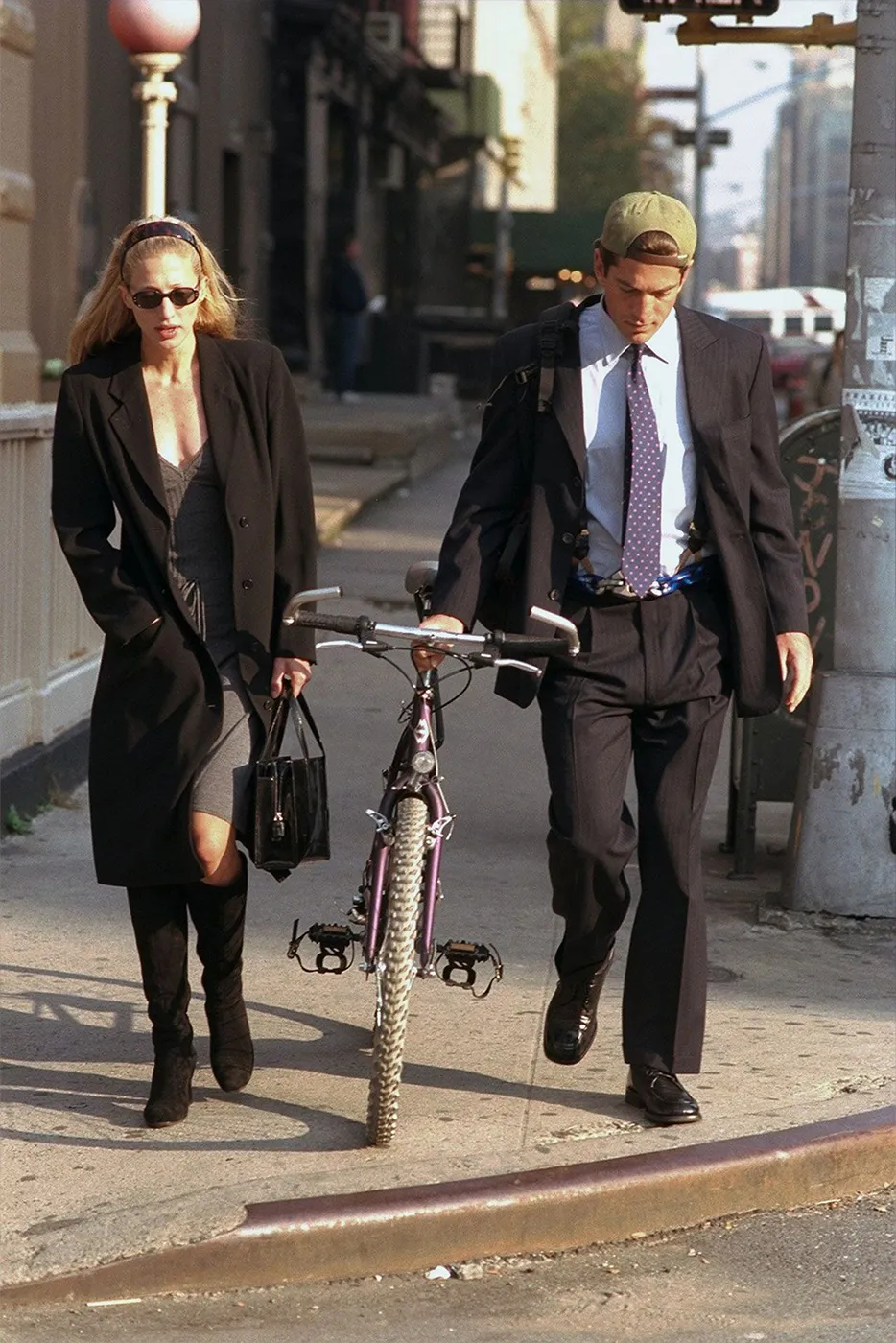
Ryan Murphy’s new show American Love Story: John F. Kennedy Jr. and Carolyn Bessette is a fictionalized retelling of the infamous 90s New York City couple that met their tragic death in a plane crash in 1999, flown by JFK Jr. himself. The show has revived their story, their role in American popular culture and media, and most prominently, their fashion. Kennedy was known for his unique personal style, often pairing a suit with a backwards cap. Bessette was particularly known for her impeccable style, having worked as a publicist for fashion powerhouse Calvin Klein before marrying Kennedy. She was one of the major faces of 90s minimalism, and known for her high-low style that balanced tailored perfection with a laid back energy.
With the popularity of Love Story, Bessette’s 90s minimalist style has taken over the fashion world. Influencers are trying their hand at incorporating elements of the simple silhouettes and neutral color palette, or recreating her looks from head-to-toe. 90s minimalism seems to be running parallel to the clean girl aesthetic, but how much overlap do the two truly have? Are they even comparable in terms of the space they occupy in the American fashion landscape?
Getty Images

Who are JFK Jr. and Carolyn Bessette?
Bessette was raised in upstate New York and comes from an American working class family background. She studied education at Boston University, but transitioned into a career in fashion after graduating. She began by working at the Calvin Klein in the Chestnut Hill Mall in Newton, MA, and worked her way up to being a publicist at the flagship store in Manhattan.
Bessette met lawyer and journalist John F. Kennedy Jr., son of former president John F. Kennedy and Jacqueline Kennedy Onassis, in 1992. Kennedy had gone to Calvin Klein for their new menswear collection, and Klein had made sure that Bessette would be the one to help him that day. After an initial connection, they remained acquainted with each other for a couple of years and officially started dating in 1994.
Once the press learned of their relationship, Bessette faced constant criticism and scrutiny from the American media. Bessette’s every-girl background and it-girl lifestyle was the perfect balance of the attainable and the unattainable. She was a hard-working career girl and made her own fairy tale. Paired with Kennedy, America’s cool and collected first son and premier bachelor, they lived at the crux of politics and pop culture. The public would project their desires, insecurities, hopes and their fears onto America’s it couple.
ZUMA
90s Minimalism
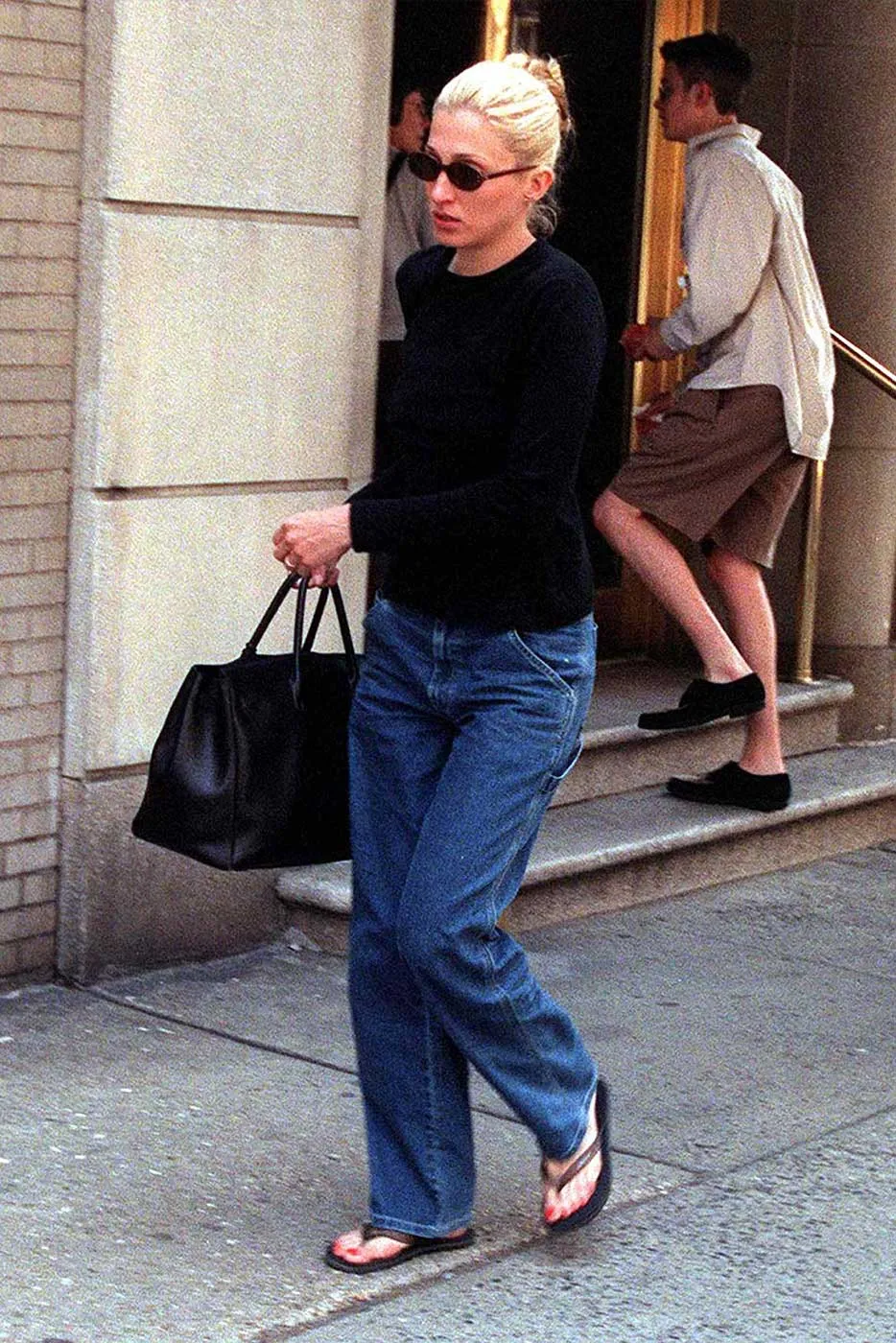
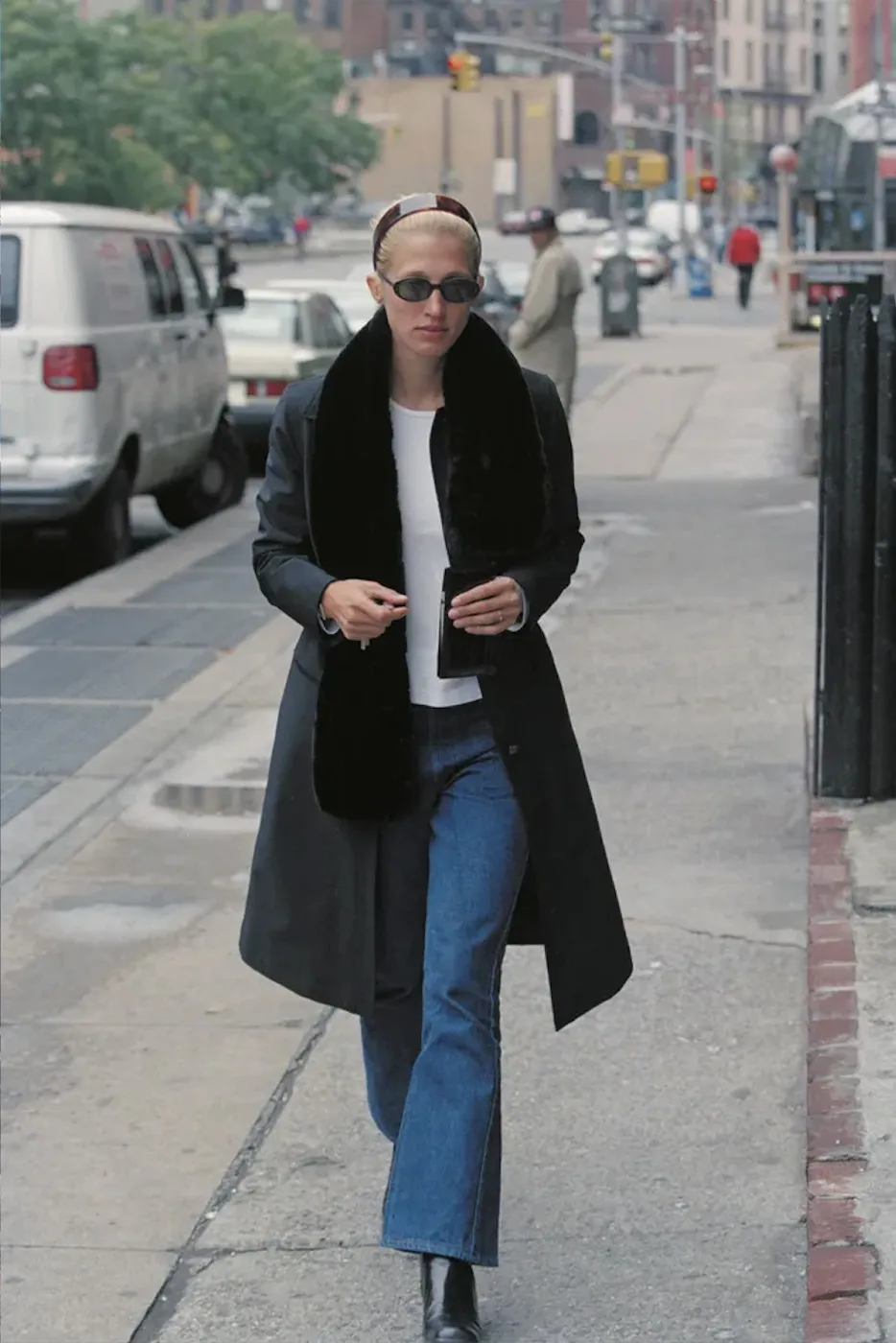
Bessette was known for her minimalist style. Working in fashion, especially at the sleek and simple Calvin Klein, Bessette had an eye for tailoring and texture. During the mid-90s, Bessette was often seen in flare jeans, strappy sandals, and black turtlenecks. She had a weakness for Prada and mastered high-low styling. After her marriage, she incorporated more preppy and dialed-down elements to her wardrobe. She became synonymous with her oversized black Birkin with gold hardware, which she carried on her shoulder, and her gold Cartier Tank Française, which she inherited from Jackie Kennedy.
Bessette was consistent in her fashion; she always wore the same hairbands, the same sunglasses, and carried the same bag. She had a clear and unwavering personal style, which lent well to establishing herself in the fashion world and the eyes of the public. Her neutrals and perfectly fitted garments were always paired with her signature sheer red lip, long blond waves either flipped over or in a loose, low bun and thin eyebrows.
What really sold the whole style was the context in which it was found. Bessette was always on the move: going to work, walking her dog, hand-in-hand with her hunk husband, or attending fabulous events. Her best accessory was New York. Quite honestly, her style could only exist and make sense in a big city. The intentional pieces, the big schlepping bags, the staple signature pieces are all informed by the cosmopolitanism she was surrounded by, reflecting the need for mobility, the simultaneous need for distinction and the desire to be “in,” and even the city’s physical geometric structures. Her look was curated around the world she worked hard to get into, and in turn, was transformed.

Getty Images
Clean Girl
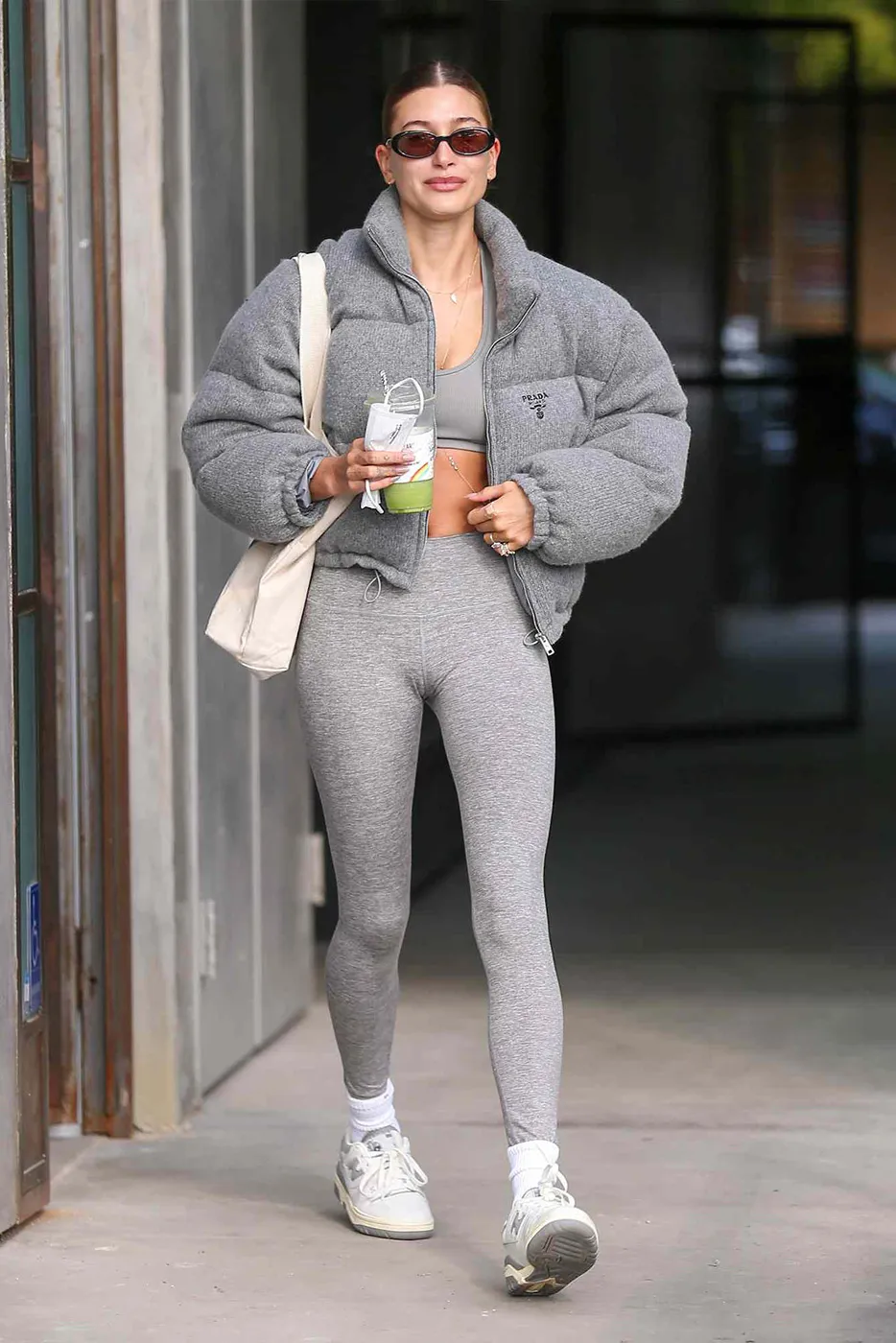
So, where do clean girls come into the picture? The clean girl aesthetic emerged in the early 2020s, with faces such as Hailey Bieber, Sofia Richie, and the Kardashians at the forefront. Clean girls are known for prioritizing health and wellness as the foundation of their look, such as doing pilates, maintaining a strict skincare routine, or getting beauty treatments that enhance natural beauty. Some of the signature beauty elements include a neutral lip combo, laminated eyebrows, glowy skin and slick back buns. Fashion wise, the look combines sporty and preppy elements to optimize productivity in both your personal and professional life.
Stylistically, 90s minimalism had a layover in model-off-duty town before landing at the clean girl, but all of these aesthetics are generally understood as under a broader minimalism. While they all share some of the same guiding principles, such as less is more, attention to detail and some element of practicality, they are all distinct for a reason. The clean girls may be drawn to 90s minimalism, but there is a distinct ideological foundation that is missing from the intent behind recreating this look.
Getty Images
Contextual Ideologies in Fashion
There’s a lack of cosmopolitanism in the clean girl aesthetic that makes 90s minimalism. The on-the-go movement of the outfits is swapped for screen ready presence, the worn-in quality is replaced with a fleeting momentary condition and the mixture of high-low is replaced with an obsession with just the high. What is meant by a vibrant city life is being constricted to what will boost social media engagement. 90s minimalism may have been simple, but it was never clean. It was messy and interesting, and leaned into the wonders of the community around you rather than the clothes on your body.
Substack writer Anastasiacng states, “And yet everything feels overdone. Because it is. It is too eager to be perceived as chic, wearing out the word,” shedding light on the over-exertion of the whole recreation trend. Bessette was such a breath of fresh air in the 90s, and her style legacy continues to impact the trend cycle to this day because her take on American fashion was reflective of American life, not the American dream. Putting her style on a shelf to be reached for rather than actively practiced cuts the roots of her whole aesthetic, creating a detachment from its cosmopolitan, progressive roots in its newer manifestations.
When you break down the actual elements of Bessette’s style, it’s nothing that you cannot find in your own closet right now. That’s why the contextual foundation of her style is crucial to any attempt at recreating it. Bessette continues to prove that it’s not just what you wear, it’s why and how you wear it that truly transforms a look. Bessette continues to be an it-girl for fashion fans around the world, and crystallizes an important moment in American fashion, politics and pop culture.