Shameless Nerd – Digital Minimalism, Creativity and Control
In today’s fast-paced digital landscape, many creators are taking a step back to reflect on their relationship with technology. Through reflection, restraint and awareness, digital minimalism has evolved into more than a lifestyle; it has become a cultural statement about reclaiming time, focus and authenticity. Among those exploring this new form of creativity is Reid, a digital philosopher who brings humour and sincerity to the conversation, illustrating how technology and art continue to shape one another.
By fusing cultural critique with humour and philosophical reflection, Aka Reid, the creative mind behind the YouTube channel Shameless Nerd, highlights how technology shapes our creative lives. He’s a musician, teacher and writer who proudly calls himself a “nerd” above all else. Reid explores everything from existential philosophy and the beauty of trees to music, science, and the ethics of online engagement. Known for his unique blend of sincerity and wit, he encourages viewers to think critically about the internet’s impact on creativity and identity. Through it all, Reid remains committed to being “earnest, creative and unapologetically cringey,” staying true to the early internet’s spirit of curiosity, community and genuine connection.
Courtesy of Shameless Nerd
Cultural & Creative Focus
In an era defined by constant notifications, algorithm-driven content, and online overstimulation, digital minimalism has become a lens through which creators examine not only their own habits but the broader cultural landscape. It reflects a growing awareness of how technology shapes attention, influences creative expression, and mediates the way audiences engage with art and ideas. The following Q&A, with Reid p/k/a/ Shameless Nerd, delves into these themes, exploring the societal shifts and creative challenges that accompany a more intentional approach to digital life.
How do you think digital minimalism reflects broader cultural shifts in how people engage with creativity and technology today? Do you see it as a reaction to overstimulation or a conscious lifestyle choice?
I think people are tired—like really, really tired. I think the growing interest in digital minimalism/unplugging/’dopamine detoxing’ etc. is a natural response to the boiling point being reached on the internet. Corporate-ification of the internet is reaching critical mass, the slop AI-pocalypse on social media is overwhelming, and frankly I think a lot of us who grew up alongside the internet—who got to see the unpolished, messy beauty of the early internet morph and distort into what is largely now kind of a hellscape—are kind of having a “Wait. What is this shit?” kind of moment right now.
Like, social media has only really been around in this modern form since about 2016: that was the first year of Twitter and Instagram’s first algorithmic timelines. TikTok has only been around in a big way since 2018. That’s less than 10 years. People smoked cigarettes for over 200 years before people realized, “Yeah, turns out inhaling black smoke directly into our lungs? Actually, yeah, that’s a bad thing.” The fact that within 10 years there are so many people who are becoming aware of how bad and lame shit is right now, I think, speaks to just how drastically bad and lame shit is right now.
Do you believe online creators have a responsibility to model healthier digital habits for their audiences? How can creators balance audience expectations with their personal boundaries?
I struggle with this. I’ve been posting stupid creative stuff online since I was 13. I’ve made music, short films, and random garbage my entire, like, conscious life, and I’ve always wanted an audience. And now all of a sudden I have—what’s ultimately still small but dramatically bigger than I ever thought plausible—audience, and I’m burdened with this weird conundrum, wherein like… All I want to do is scream like “Hey, stop watching YouTube, social media is bad, put your phones away… but like, still watch me! I’m good, and it’s okay to watch my stuff!” And that feels really icky and unethical. And I talk a lot in my stuff about my personal experiences, because I try to make it relentlessly clear that I’m just a random moron on the internet, like all of us are, and all of our experiences are profound, and beautiful, and strange—and that’s so cool, and we all have something to offer. But then I’m constantly trying to balance between what is sharing for a good purpose and what’s fostering a parasocial audience-creator relationship, ya know? Shit’s hard.
How do you see social media shaping — or limiting — genuine creative expression in modern culture? Are there ways digital minimalism can foster more intentional content creation?
I think social media is simultaneously the single most important vehicle through which creative expression was democratized—and it is also now the single most limiting factor of true creative expression. The difference is just the introduction of curation algorithms, in my opinion. When what you are being passively shown is based on what you’ve shown an unfeeling algorithm that you already like, a cyclical recommendation experience is inevitable. And on the creator side of things, I can make whatever I want, technically speaking, and that’s great, but there are just realities of social media and algorithmic curation. Like creators on social media have to “please” the algorithms with what they make—this is why you see so many TikTok creators making the same. damn. video. over. and. over. again, for example. Or why YouTubers tend to talk about one hyper-specific topic and that topic alone. And I try really hard to not do that. To make my little YouTube channel niche-less. In one month, a few months ago, my four videos were about the first Pokémon movie, the importance of the existential awareness of one’s own death, how and why to get a modded Nintendo 3DS, and the real meaning of “The Road Not Taken” by Robert Frost. I want desperately to somehow prove that it’s still possible, the original doctrine of YouTube—to broadcast your boundless creative ideas, and for that to still be successful. And so far, so good. But it’s really hard.
Courtesy of Shameless Nerd
In your view, is digital minimalism a privilege or a necessity in today’s content-driven world? How does it intersect with accessibility and the pressures of maintaining an online presence?
I think, and have argued in a couple of videos on my channel, that it’s all but a necessity. I believe in an almost sacred importance of balance: that the annoying-ass answer to every single conundrum is balance: diet, exercise, fun, work, parenting, creative endeavour, and romantic relationships. To be successful in anything is to find balance, and it’s really annoying that it’s that simple, but also that such simplicity is so difficult and personally specific and nuanced. But ultimately, I think right now our social media presence, our smartphone reliance, etc., is just way out of balance. And like I said earlier, I think this period of history will be looked back on in (hopefully) 10-20 years in the same way we look back at, like, letting children smoke cigarettes—like ‘Oh yeah, why did we ever think that was okay and normal?’
Do you think society is moving toward a collective awareness of digital burnout, and how does that awareness impact cultural norms around technology and attention?
The attention wars are real. I think that we, as consumers—and we as creators—have to come to realize that the attention wars are real, and what’s really cool about that is that we have what they want. It’s our war to win.
Courtesy of Shameless Nerd
Personal Focus
While digital minimalism reflects broader cultural trends, it also represents a deeply personal journey for creators navigating hyperconnected lives. Reid’s experience illustrates how intentional technology use can reshape daily habits, restore focus, and redefine authenticity in both creative work and everyday life.
How has your own relationship with technology evolved since starting Shameless Nerd?
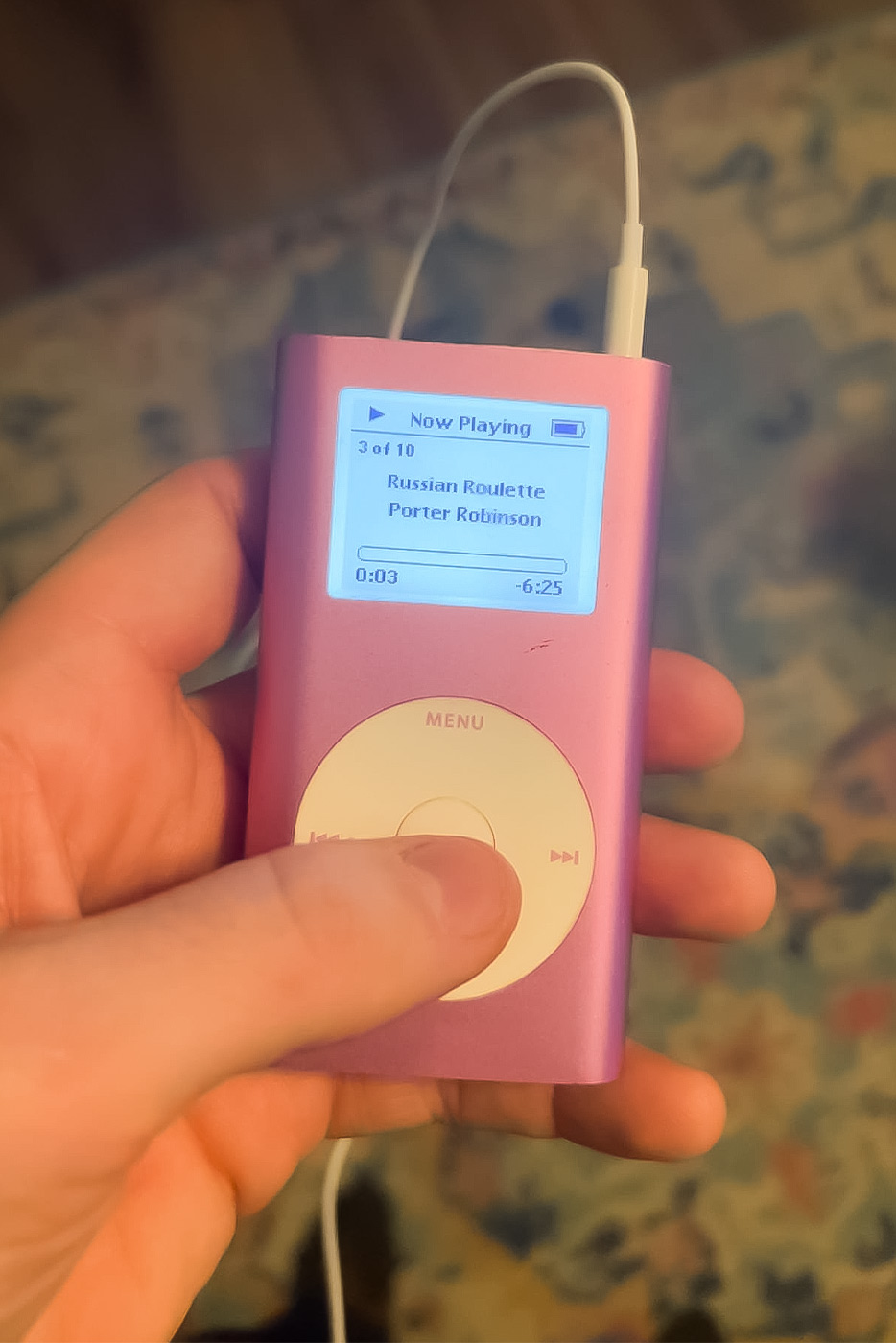
It’s improved tremendously because ultimately I would be a massive hypocrite if I didn’t take my own advice, so the more research I’ve done on this stuff, the more thought I’ve put into it, the more I’ve had to confront my own habits and—frankly—addictions. So in the 8 months of my channel, I’ve gone from 10+ hours of screen time per day, almost entirely dedicated to passively consuming social media content, to less than 1 hour of screen time per day, and a sometimes seemingly endless amount of free time dedicated to my creative passions. I’ve also developed a love and appreciation for so many things now I would’ve never considered—photography and videography, for example, because my shitty little flip phone camera sucks and I now carry a real camera around with me. Or my little iPod mini, I modded and now cherish and would protect with my life. Or my Nintendo DS, like I mentioned. Reading again, for the first time in years. Being bored. It’s so incredibly nice, freeing, and restorative to just be bored. I didn’t realize until this year that I literally had not been bored since I was a child. And I think that’s the case for a lot of us… and I think that’s kind of scary and weird.
Why do you think this lifestyle is valuable for creators and audiences alike? Are there aspects of digital minimalism that can be surprisingly difficult or misunderstood?
I think that we are almost inarguably affected in vastly negative ways by our phones. There’s just an overwhelming amount of research out there about it. It’s scary as hell. And, I’m a relentless optimist. I try not to let myself get too worried about the world in this context, but at minimum, like… y’all. 10+ hours of staring at a screen in my hands, like. That can’t be good, at minimum. And so I think the value comes in just getting some of our lives back. I often genuinely feel kind of like a child again. I think our brains are struggling to keep up with the neurochemical demands of constant doomscrolling and hyper-stimulating video games and movies and TV and porn and notifications and texting and advertisements and podcasts and on and on, and I think there’s a lot of value to be found in letting our brains catch a breath, so to speak. The good news is that I think making a real, major change is actually super easy. I have an extremely addictive personality. And when I say I was addicted to social media, I believe based on extensive research that that is a literal phrase. And since I’ve gotten off social media, I have had absolutely zero pull to go back. Since I’ve given up my smartphone and got my little shitbox dumbphone, I have absolutely zero pull to go back. I just really don’t think that most people who try to make these changes end up missing it very much. This shit is so pervasive and so in-our-faces that we don’t have the time and space to realize how miserable it’s making us—and the second that we give ourselves that time and space, I think most of us realize it pretty quickly. And you just don’t really want to go back.
How do you personally define “digital minimalism” in your daily life or creative process?
I have a literal flip phone. It’s a Sunbeam something or another, and it is made for dorks like me who are trying to “digital detox” or whatever—meaning that there isn’t a web browser or app support or video capability, etc., but it does have a GPS navigation, it does have text-only email, it does have a Wi-Fi hotspot. And what I do, because the modern world does make it hard sometimes to navigate society without a smartphone—checking into a hotel, or paying for parking, or 2-factor authentication, etc.—I have my old iPhone, and I just keep it in my bag, and if I need it for something, I get it out, connect to the hotspot, and then I can still use it for whatever expressed purpose. And that has worked for me. Other than that, everything else is just fun quirks. I use my little iPod for music, and I get to organize my iTunes library again, which is so fun, and I play my DS if I’m waiting in a lobby somewhere bored, or I read, or I draw or journal. Like, almost all of what is being replaced is just idle time I would be spending scrolling through AI-generated videos about celebrities I’ve never heard of, anyway. It’s not like I’m really sacrificing much in the grand scheme of things.
What advice would you give to creators who are struggling to stay authentic while navigating algorithmic trends and online expectations?
My main advice would be that if you are inauthentic, even if it does end up ‘working’ at first, it will come back around to bite you eventually. And if you are yourself, you’re being unironically, unapologetically, creatively, cringe-ly you, then not only is that more fulfilling, but it’s more sustainable, like as a business model. If you make the “brand” about whatever trend you’re hopping on, whatever niche topic the algorithm first picks up from your channel or account, or whatever is working for some creator bigger than yourself, then your viewers are only going to watch and engage with your content when it resembles that bigger creator, or when it’s trendy, or whenever there’s no better option in that niche. If you make the ‘brand’ you, then they’ll always be viewers of you, because they like you.
And it’s harder than it used to be, but it’s still possible. And the more of us there are, the easier it will be. People miss the old internet. People miss earnestness and genuineness. There is plenty of algorithmically curated and procedurally generated slop. All we have to offer, as humans, in a world increasingly being run by and for artificial intelligence, is our humanity. There will always be a place for humanity. Because we’re human. So…be human.
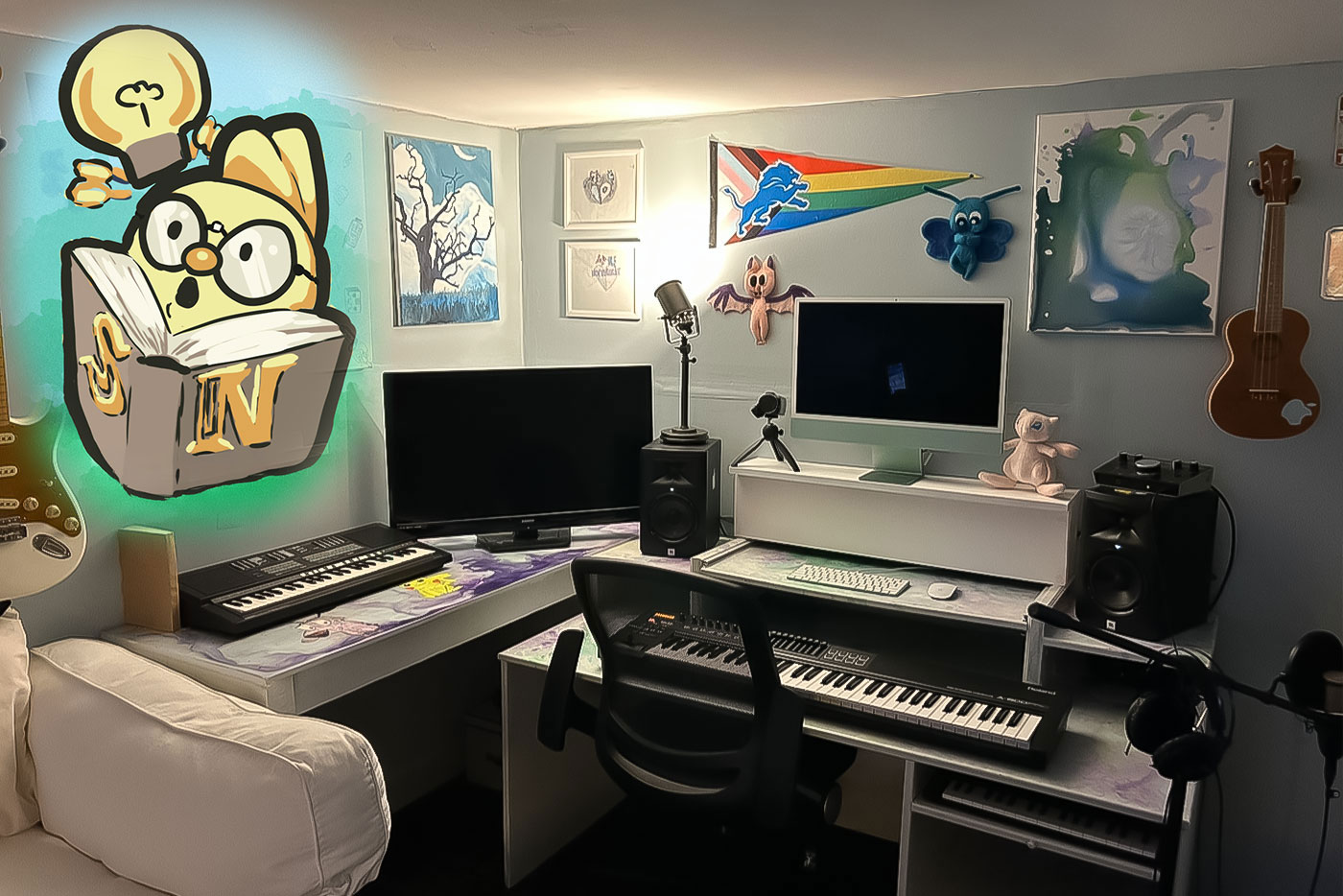
Courtesy of Shameless Nerd
Beyond the Screen
Digital minimalism is more than a lifestyle – it’s a tool for reclaiming focus, creativity, and balance in an age dominated by constant connectivity. Reid’s journey demonstrates that intentional choices about technology can enhance both personal well-being and creative expression, offering a model for creators and audiences alike to navigate the digital world more thoughtfully. By prioritizing authenticity over algorithms, he reminds us that meaning in the digital age begins with mindful engagement – not endless consumption.