The Super Bowl Didn’t Translate and Bad Bunny Didn’t Care
When Bad Bunny stepped onto the Super Bowl halftime stage on February 8th, 2026, the tone was set immediately. Spanish led the performance without any hesitation. The music moved fast, the dances filled the field, and the stage kept shifting before any one image could settle. Nothing waited to be explained.
Color did a lot of the talking. Greens, reds, and yellows layered across the field as the set moved though the scenes tied closely to Puerto Rican life. Sugarcane fields, packed house parties, and neighborhood spaces that looked and felt familiar. The performance framed these moments as normal, lived-in environments.
Bad Bunny didn’t slow down for clarity or adjust the sound for a wider audience. His native tongue carried the entire set with confidence, trusting rhythm and repetition to bridge any gaps. The effect was exemplifying and grounding because the music assumed connection rather than asking for it.
Courtesy Kevin C. Cox / Getty Images / AFP
When the Guests Know the Assignment
The guest appearances worked because they didn’t interrupt the story. Ricky Martin joined Bad Bunny for a verse of “LO QUE LE PASO A HAWAII,” and the moment landed with quiet weight. Martin’s very presence brought much nostalgia, recognition, and continuity for the Puerto Rican heritage. Two Puerto Rican artists from different generations stood side by side, performing a song tied to questions of land, loss, and preservation of beginning roots and culture.
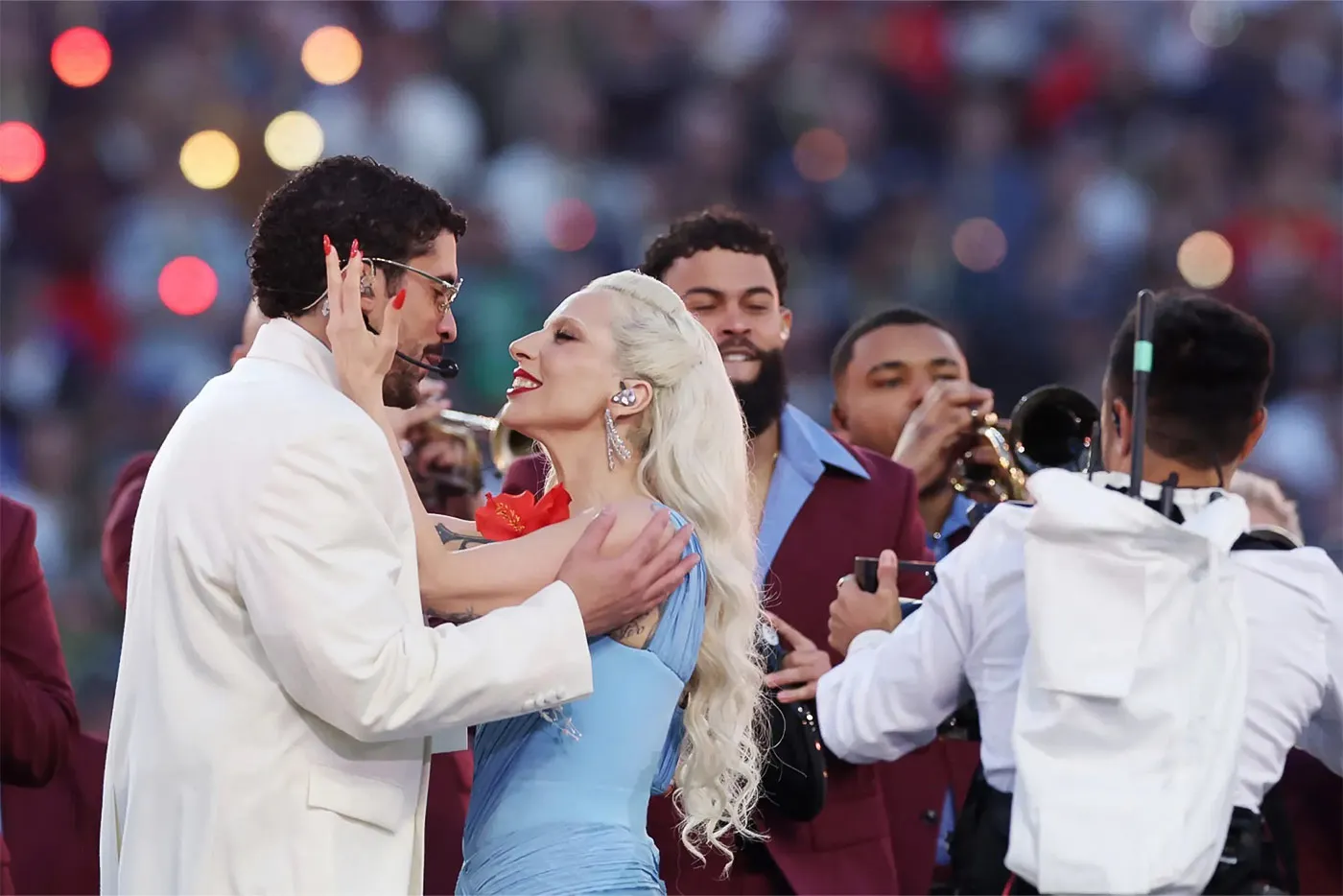
Lady Gaga’s appearance followed the same logic. She delivered a reggaetón-influenced version of “Die With a Smile”, reshaping her own song to fit the world Bad Bunny had already built. She didn’t divert the focus or shift the mood. She allowed the performance to continue on the same beat, meeting it where it was at.
Cardi B’s blink-and-you-miss-it dance cameo passed through just as easily, adding a fun surprise and an undeniable energy that Cardi seems to carry with her anywhere she goes. None of these moments stopped the show to announce themselves, but rather folded into it.

Courtesy NBC
The Quietest Moment Hit the Hardest
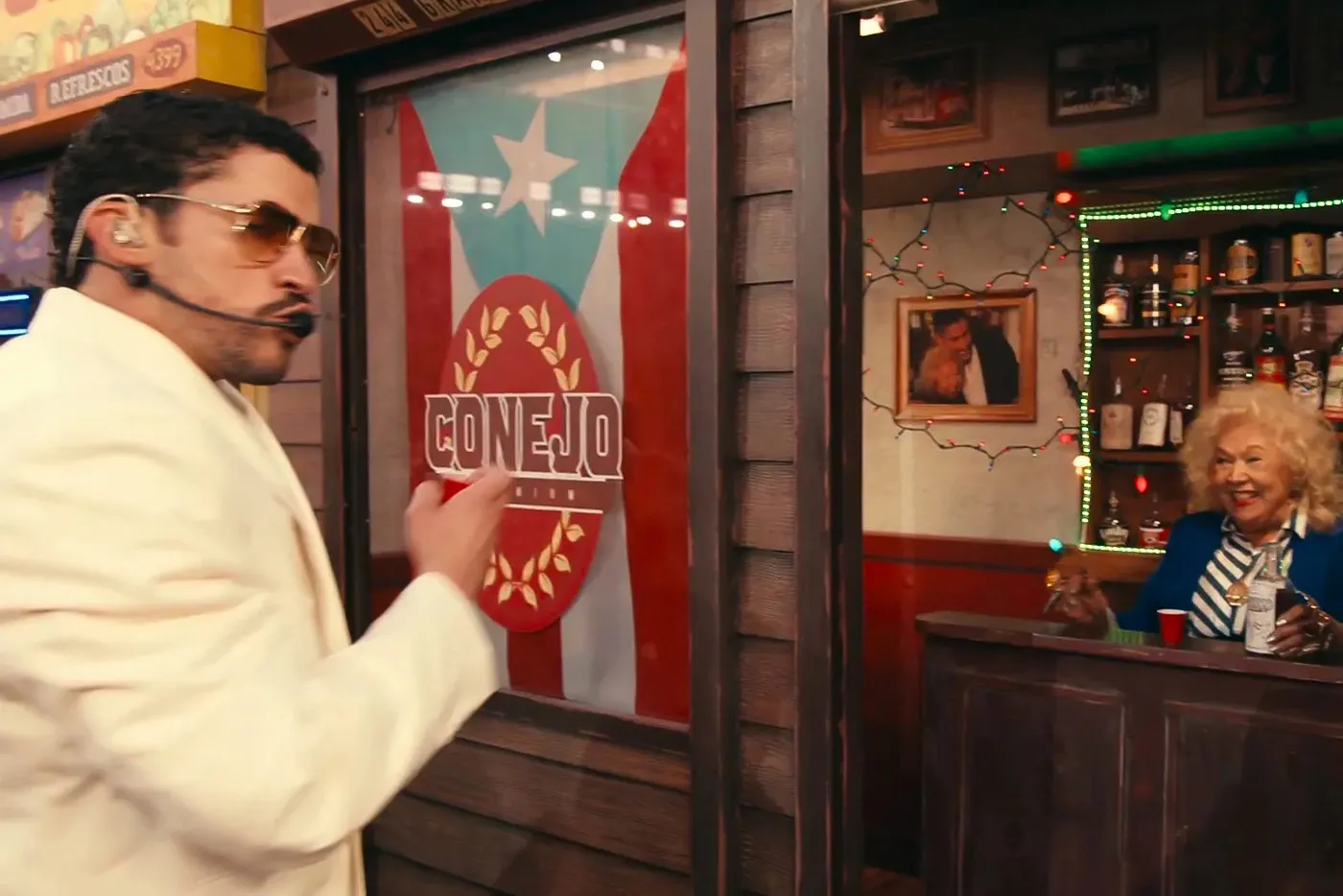
Midway through “NUEVAYoL,” the stage transformed into a replica of Toñita’s Caribbean Social Club in Williamsburg, Brooklyn. Behind the bar stood María Antonia “Toñita” Cay, now 85. She handed Bad Bunny a shot of cañita.
For those familiar with the club, the meaning was clear. Toñita’s has long been a gathering place for the Puerto Rican community in New York, surviving decades of gentrification because Cay refused to sell it. Bringing her onto the Super Bowl stage was recognition for the elders of Puerto Rican culture, for the shared spaces, and for the people who keep culture intact without asking for applause or knowledge.
As the show moved towards its close, flags from across the Americas filled the field. There was no speech to explain the moment or an attempt to translate it into a slogan, the image stood on its own.
Bad Bunny didn’t turn the halftime show into a political argument. He offered something simpler and harder to dismiss, “the only thing more powerful than hate is love.” He made it clear that languages will be spoken without apology and all cultures will be presented at full volume. For thirteen minutes, the Super Bowl didn’t feel like it was hosting something new, it felt like it had finally made room for what was already there.