Method Marketing and Detachment – Everything Is Egotistical
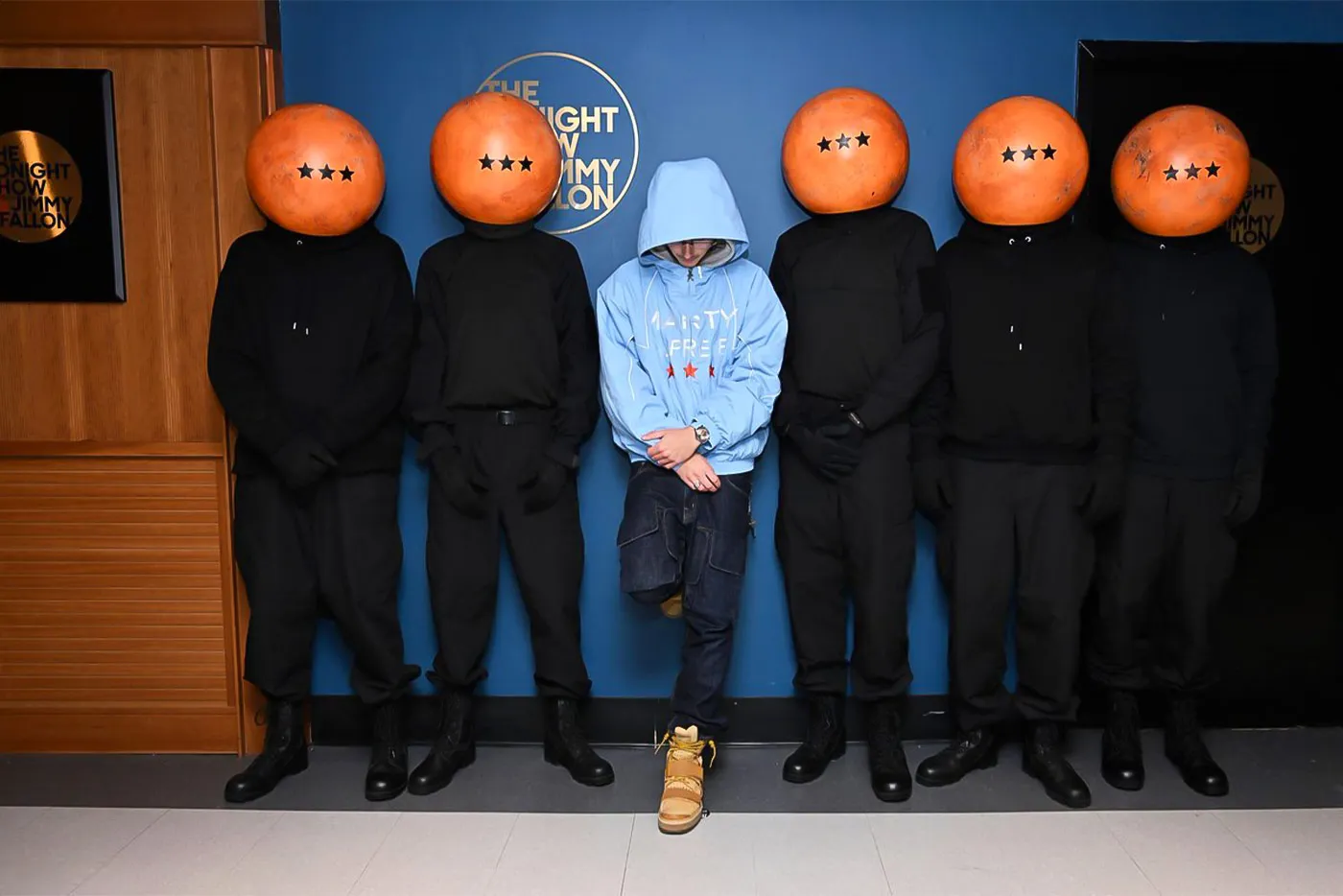
In the early weeks of the Marty Supreme promotional cycle, Timothée Chalamet’s marketing approach drew attention not only for its bizarre visuals but also for its stylistic ambition. The film’s campaign is widely described as having departed from a typical press tour, favoring a total theatrical experience instead, with extended promotional moments, surprise public appearances flanked by costumed performers and intentionally surreal imagery, including oversized ping-pong heads.
This approach resembled method marketing, a strategy in which performance, persona and publicity merge into a seamless act. Instead of advertising the film from the outside, promotion embodies its ethos outward, blurring the lines between character, actor and promotion. Similar to method acting, the performer remains in character, with marketing becoming integrated into the script.
What happened next was a shift in how the campaign was discussed. Features that originally distinguished the rollout apart were gradually seen as unnecessary. Focus shifted from effectiveness to a more general discomfort with promotion that refused to become understated.
Timothée Chalamet via X/ @timotheeupdates

Amongst the Orange Balls
On Oct. 7, 2025, the Marty Supreme promotional campaign officially began with a five-minute video post on X (formerly Twitter). It featured a figure sitting inside a clear cage, shin-deep in bright orange ping-pong balls, his head hidden beneath a helmet made from the same plastic spheres.
Pairs of table tennis players volley back and forth around him in precise, rhythmic motion, with their heads also encased in ping-pong helmets.
There were, quite literally, a lot of balls.
After a moment, the figure was pushed from the cage by an unseen force, propelling him into open space. He took off his helmet, revealing himself as Chalamet in a newly debuted buzzcut, then ran toward what was clearly an interview set. He announced in a flat tone: “Marty Supreme is an American film coming out Christmas 2025.” As he spoke, the camera pulled focus away from his face and settled instead on the title behind him.

Timothée Chalamet/ A24
The 18-Minute Zoom Call
The campaign’s next move was an 18-minute meta Zoom call, also shared on X, showing Chalamet seated alongside marketing executives discussing Marty Supreme’s promotional plans, driven by Chalamet’s “out-of-the-box” pitches, including orange blimps, landmark takeovers and his face on Wheaties boxes, some of which would later materialize.
The key aspect of the Zoom call is that it exposes the mechanics of marketing without neutralizing them. It rejects the pretense that promotion is effortless or organic. Instead, labor, pitching and excess are foregrounded as reality. Marketing is not hidden behind a casual facade; it is performed openly and in real time.
This approach challenges the growing expectation in modern promotion that effort should be barely noticeable or invisible.
Timothée Chalamet and EsDeeKid via Instagram/ @archieerskine
EsDeeKid’s “4 RAWS” Feature
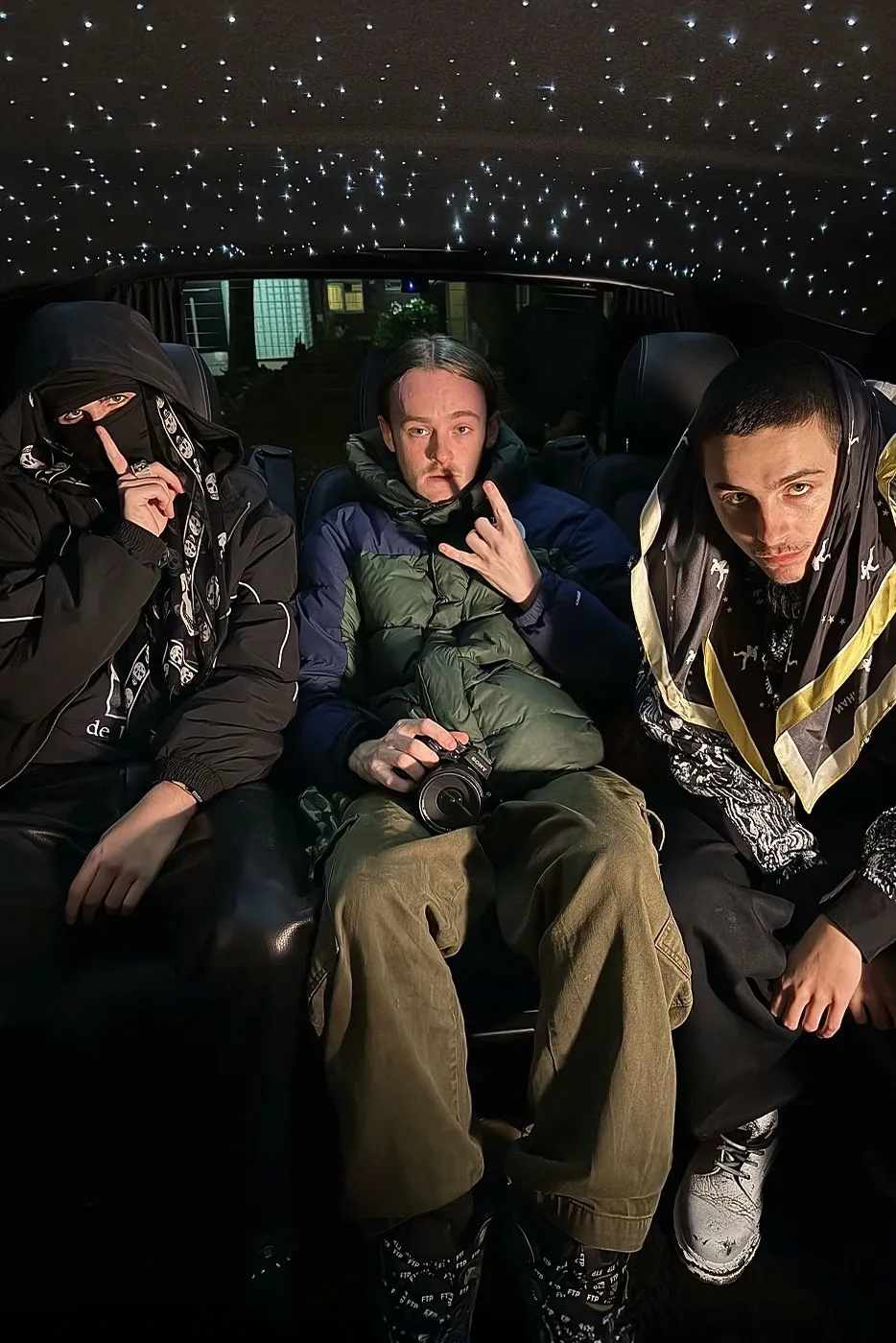
A collaboration with British rapper EsDeeKid signaled a shift toward hype-driven ambiguity. The ambiguity was built around circulating rumors that Chalamet was secretly the masked performer behind EsDeeKid’s persona, the rollout leaned fully into speculation.
The link to Marty Supreme, a film essentially about table tennis, remained strategically vague. The campaign neither confirmed nor denied the association, letting uncertainty circulate beyond the film. Ambiguity became the product itself, with meaning assembled collectively rather than explicitly presented.
As the collaboration gained traction, it also drew immense scrutiny. What initially appeared to be an understanding of subcultural codes soon drew skepticism as it grew. When gestures lose their obscurity and meaning, they cease to be participatory and begin to resemble citation. Some saw this as an intelligent tactic, while others viewed it as bandwagoning through the extraction of subcultural symbols for profit.

Timothée Chalamet on Jimmy Fallon
Backlash, with Receipts
Online, the response was far less charitable. Across X, Reddit and TikTok, the campaign quickly devolved into punchlines. Clips from the ping-pong video were shared with captions questioning whether the rollout was “genius or just embarrassing.” Others labeled it as “try-hard,” “arrogant” or “delulu.”

The conceptual play of marketing suddenly turned into an overt display of narcissism. Chalamet, responding to several outlets, just stated, “I’m trying to get this out in the biggest way possible.”

Marty Supreme/ A24
Nonchalance as Cultural Rule
Mockery, in this context, served more as a way to categorize than to critique. In a culture influenced by digital minimalism and algorithmic control, nonchalance signals credibility. The necessity to justify desire indicates an ongoing expectation that passion should be understandable within social comfort zones. When ambition is expressed too openly, it often needs to be moderated and sincerity without irony can seem suspicious.
Under these conditions, Chalamet’s choice to show his commitment was no longer seen as confidence but as ego. The term “try-hard” here highlights not a failed strategy but a cultural discomfort with expressed desire.
Timothée Chalamet and Josh Safdie at the 2026 Critics Choice Awards via X/ @timotheeupdates
Artistic Limits
The influence of this conditioning goes beyond a single campaign. When restraint is seen as a marker of intelligence or awareness, art is discouraged from occupying too much space. Scale is mistaken for arrogance, while passion is reduced to performativity.
Within this societal expectation, visibility becomes problematic.
Maximal effort draws scrutiny not for what it produces, but for how clearly it appears. While excessive care and unapologetic desire are not outright rejected, they are managed or reframed as “embarrassment.” Some forms of desire remain unrecognizable; others seem out of place. Though the boundaries are rarely explicitly stated, they are generally understood.
At a recent Q&A at London’s Prince Charles Cinema, Chalamet described the campaign as,“the new way of doing stuff.” “I’m trying to reach audiences,” he said. “I don’t want to be in the pretentious in-crowd.” Later, he added, “I see myself as an artist expanding.”
Thus, what constrains isn’t mere expression but the acceptable terms for expressing ambition. This restriction isn’t categorized as censorship but is felt as a tone, an atmosphere and the expectation that art remains cautious.
In doing so, art often stays smaller than it could be. The boundaries that aren’t usually named are widely understood.