Grammys 2026 – Historic Wins, Culture & Controversy
On Feb. 1, The Recording Academy held the 68th Annual Grammy Awards. The ceremony recognizes and celebrates greatness within the music industry across all genres.
The Grammys represent significant achievement within the music industry and awards such as Song of the Year, Album of the Year and Best New Artist can end up making an artist’s career. This year all of the above categories and many others saw historic and iconic wins.
Alongside Bad Bunny’s Album of the Year win, the awards showed a wide range of diversity across categories, with major wins across different communities. K-pop got some big shoutouts this year, with the award for Best Song Written for Visual Media going to “Golden” from KPop Demon Hunters. More representation featuring the Asian community came from Rosé’s performance of “APT.” alongside Bruno Mars.
Another standout of the awards was celebrities taking their opportunity on stage to discuss ongoing issues in American politics. This was reflected in the speeches and wardrobe choices, and is sure to continue throughout awards season.
The biggest controversy of the year may come from the inclusion of “TikTok artists.” These artists are often defined by songs or careers becoming major due to TikTok. Musicians like Alex Warren and Addison Rae were both nominated for major awards, and music purists weren’t the most eager to support that.
Stewart Cook/Getty Images
Winners That Defined the Night
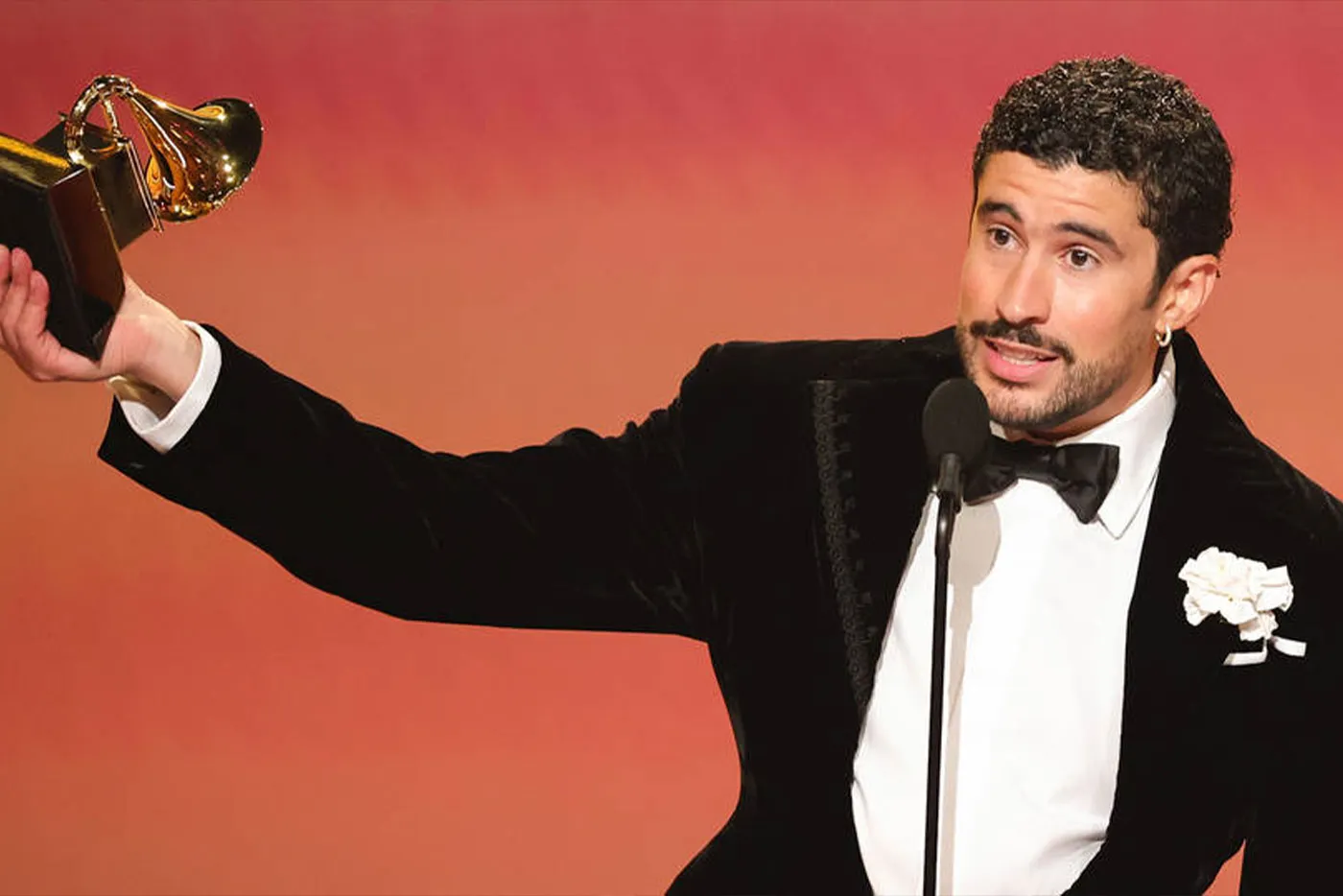
This year’s ceremony was a night full of well-deserved wins and surprises. Some artists made history, including Bad Bunny’s monumental Album of the Year win with Debí Tirar Más Fotos, the first fully-Spanish album to win the category. Bunny took a second to soak in the moment, composing himself for around 20 seconds as the crowd launched to their feet to cheer him on.
Others were huge surprises, like Billie Eilish taking home Song of the Year for “WILDFLOWER,” which she first released with her album HIT ME HARD AND SOFT in 2024. While the album won zero awards at the 2025 ceremony, Eilish’s release of “WILDFLOWER” as a single made it eligible for the 2026 awards, prompting users online to question the legitimacy of the win. Unsurprisingly, Record of the Year went to Kendrick Lamar and SZA for “luther,” although Cher accidentally announced the winner as Luther Vandross, whom the song is based on. In the other main category, Best New Artist, each nominee gave shortened performances of their biggest hit. The award went to Olivia Dean, best known for her hits “Man I Need” and “So Easy (To Fall in Love).” Dean was favored to win the category on Polymarket, and her win was well-deserved.
The biggest surprise of the night went to Lola Young’s win for Best Pop Solo Performance with her hit “Messy.” Young, who was also nominated for Best New Artist, beat out big names such as Lady Gaga, Sabrina Carpenter, Justin Bieber and Chappell Roan. The win took the audience and Young off-guard, as she leapt out of her seat and bolted to the stage with no speech prepared, but unwavering gratitude oozing out of her every word. Outside of the main ceremony, rock band The Cure won their first two Grammys after five decades of performing, securing Best Alternative Music Album and Best Alternative Music Performance. Doechii took home Best Music Video for “Anxiety,” despite Sabrina Carpenter’s “Manchild” polling at 70% on Polymarket compared to Doechii’s 21%.
This year’s wins solidify that Grammys are not awarded based on charting impact, but the quality of the song.
Kevin Mazur/Getty Images for The Recording Academy
Standout Performances & Production
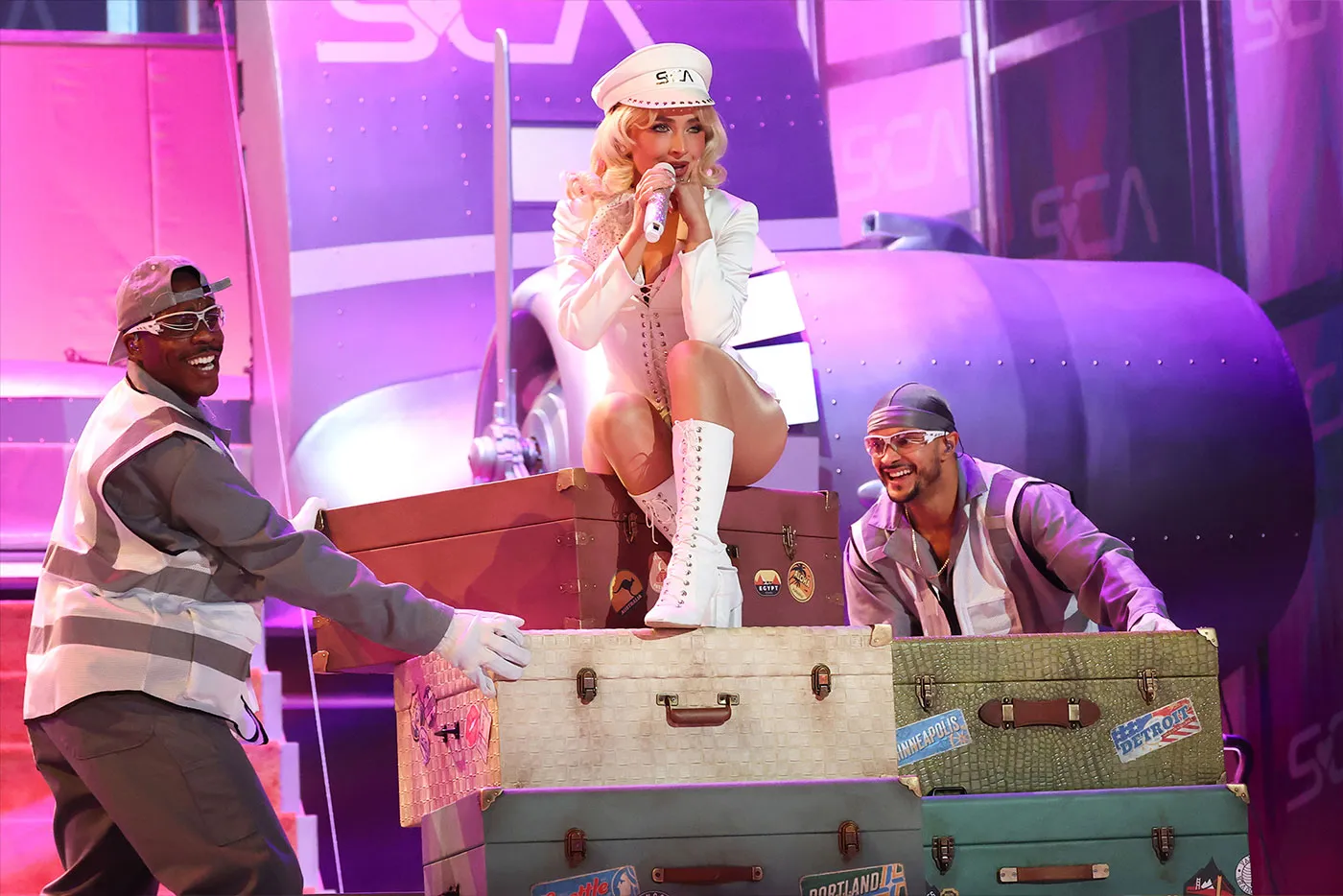
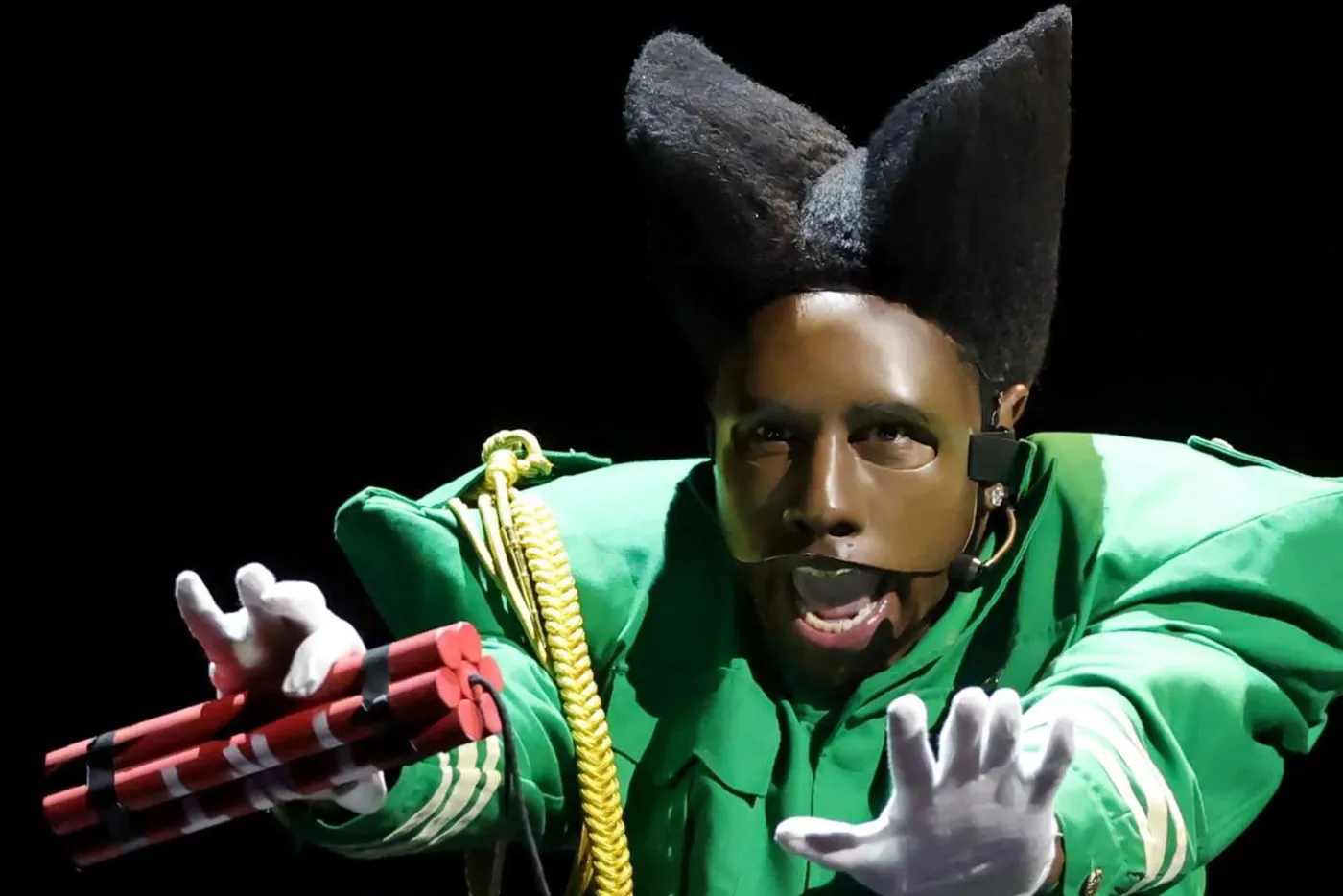
The live performances and on-stage production were beyond gnarly, delivering high-concept staging with a noticeable contrast between maximalism and minimalism. Sabrina Carpenter provided one of the most elaborate visual performances, turning the stage into a busy airport complete with plane fuselage, baggage carts, and a crew of dancers dressed as pilots and ground staff for her performance of “Manchild.” Tyler, the Creator matched the theatrics with a multi-set mix of “Thought I Was Dead” and “Sugar on My Tongue.” His set featured pyrotechnics, gushing water, and even a sports car, leading to a dramatic explosion that blew up the stage and earned him a standing ovation.
Kevin Winter/Getty Images for The Recording Academy
In contrast, a few performers decided to tone things down and rely on lighting and their own talent. Justin Bieber made a return to the stage for a stripped-down rendition of “Yukon,” performing in only boxer shorts and socks. He used loop pedals and a guitar to create a vulnerable, intimate space that stood out against the night’s flashier moments.
Lady Gaga took over the stage and turned it into an ’80s gothic fever dream for her performance of “Abracadabra.” While wearing a massive eyeball mask, her production used heavy fog and scarlet lighting to lean into a synth-heavy, analog sound that felt both nostalgic and innovative.

Let’s not forget the emotional high points of the production, which were anchored by massive tribute segments. The In Memoriam section was utterly beautiful and was led by Lauryn Hill in her first Grammy performance in nearly three decades. The segment evolved into an R&B celebration featuring John Legend and Chaka Khan to honor artists who have passed, such as D’Angelo and Roberta Flack. Meanwhile, the tribute to Ozzy Osbourne, performed by Post Malone, Slash, and Chad Smith, electrified the room with massive fire bursts and heavy-metal pyrotechnics.
Amy Sussman/Getty Images
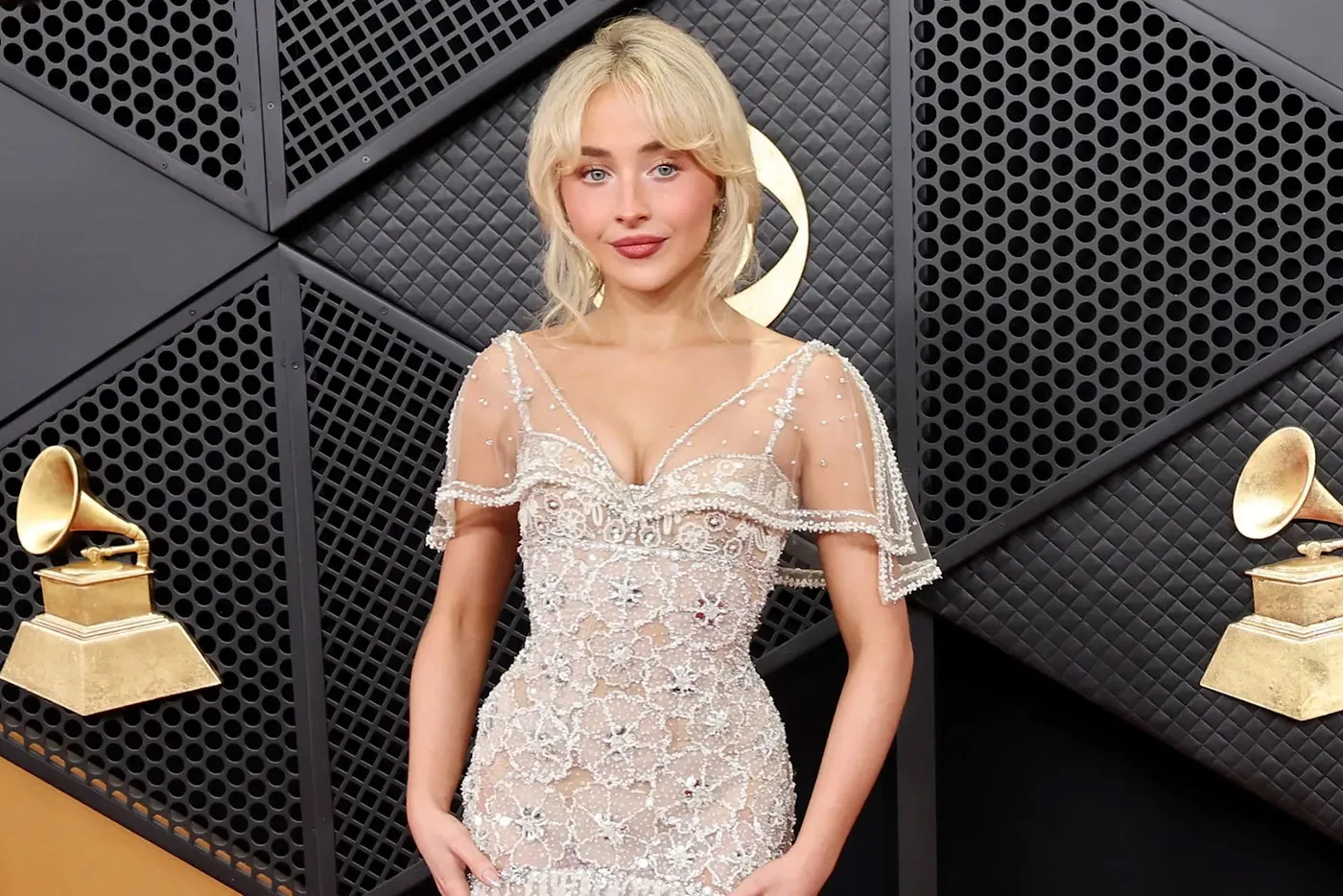
Fashion & Visual Culture
Following the trend set by the 2026 Golden Globes, the Grammys were a disappointment for viewers looking for a good meme.
Among the best dressed include Sabrina Carpenter’s Valentino red carpet look and PinkPantheress in a multicolored Vivianne Westwood gown.
Though these were among the best looks they were not among the headturners. That category was ruled by Chappell Roan. Roan was in a sheer Mugler dress that was held up from her nipple rings. Her whole back was exposed as well, allowing for her tattoos to be featured as a part of her look.
As for the men, Bad Bunny was best dressed on the carpet in a velvet Schiaparelli suit. Harry Styles in Dior is also among the top outfits, despite how casual it was with him wearing jeans for his bottoms. Viewers especially loved seeing the two on stage together when Styles presented Bad Bunny with the Album of the Year award. This became a moment online for both of the two being ex-boyfriends of celebrity Kendall Jenner. Not to mention the amount of fans who are now begging for a collaboration between the two artists.
Off the carpet, many celebrities made outfit changes once inside the awards. Carpenter, being among one of the artists who made a wardrobe change, switched into a two piece Valentino set once inside. Then another airline themed outfit for her performance of “Manchild.”
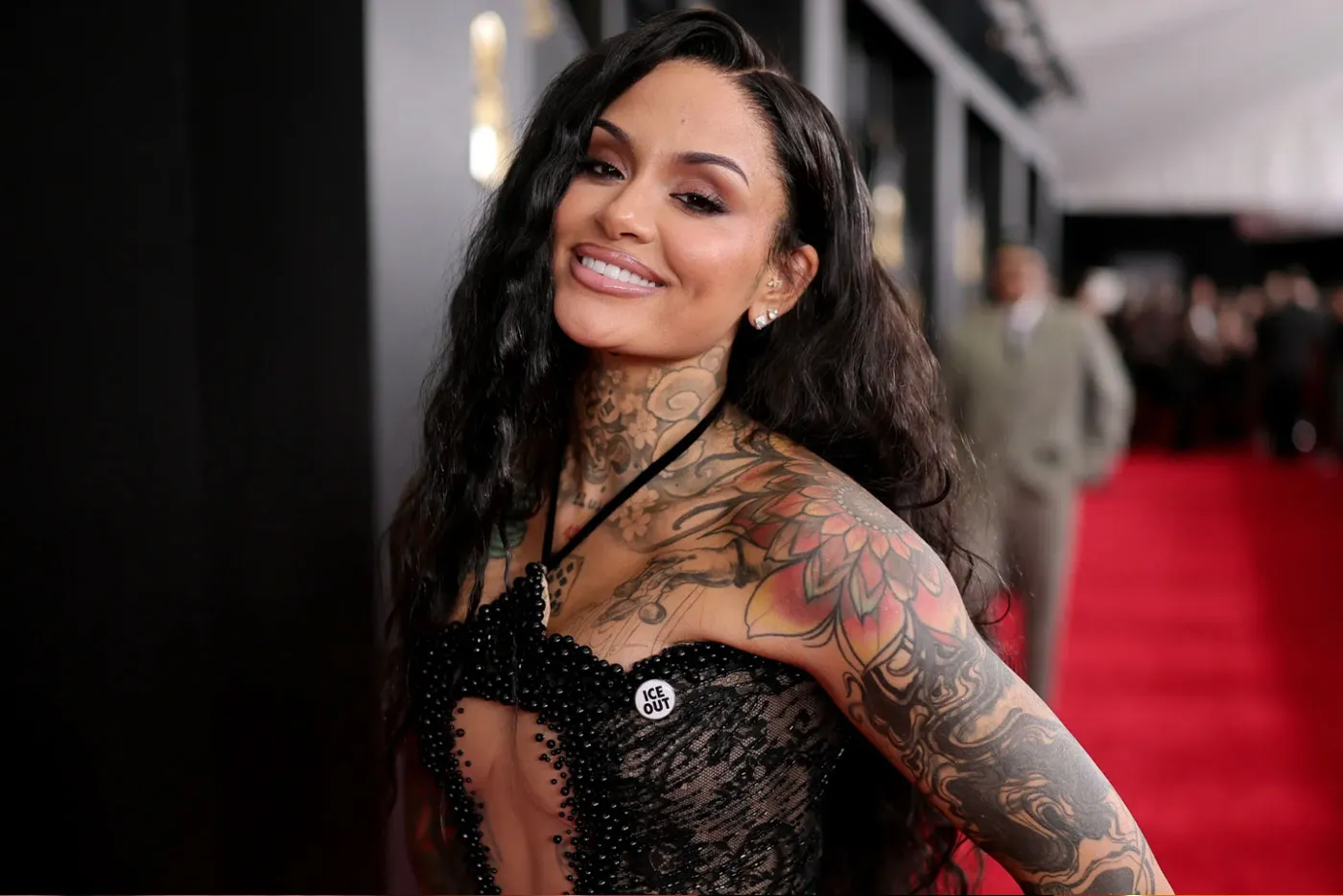
Another big moment, what has now become common for award shows, was the political statements. Though most of the statements were confined to acceptance speeches, the “ICE OUT” pin that made its first appearance at the Golden Globes was sported by many more celebrities at the Golden Globes.
Billie Eilish, Justin Bieber, Bad Bunny and more all sported the pin in reference to the United State’s ongoing issues with the U.S. Immigrations and Customs Enforcement throughout many U.S. cities.
Viral Moments & Speeches
The Grammy Awards have long been a stage for unforgettable musical triumphs, but they’ve also become a platform for powerful cultural and political statements. Over the years, artists have used their acceptance speeches to highlight social issues, honor marginalized communities, and call for change. These moments often resonate far beyond the ceremony itself, shaping public conversations and underscoring the influence musicians hold in global discourse.
One of the most striking examples came when Billie Eilish and Bad Bunny used their 2026 Grammy speeches to once again denounce U.S. Immigration and Customs Enforcement. Billie Eilish, accepting Song of the Year, declared, “no one is illegal on stolen land,” before bluntly adding “fuck ICE,” a moment that was partially censored on broadcast television. Bad Bunny echoed the sentiment during his own win, opening with, “Before I say thanks to God, I’m going to say, ‘’ICE OUT,’” and reminding viewers, “We’re not savage. We’re not animals. We’re not aliens. We are humans, and we are Americans.” Their statements became defining moments of the night, symbolizing a unified call for compassion and immigrant rights.
Beyond these headline-making speeches, the Grammys have repeatedly showcased artists who use their visibility to advocate for justice. From performers wearing symbolic pins and clothing to winners dedicating awards to oppressed communities, the ceremony often reflects the political climate of its time. In 2026, you could not look past the “ICE Out” pins, turning the red carpet into a visual protest and reinforcing the collective message shared onstage.
Neilson Barnardi/Getty Images
The Industry Lens
This year the Recording Academy arrived with a shared collective narrative to tell. The most noticeable theme of the night was political speeches, especially about immigration which was a frequent reference point, highlighted by anti-ICE sentiments and visually represented by the aforementioned popular “ICE OUT” pin worn by many artists. Billie Eilish’s remark “nobody is illegal on stolen land” sparked immediate online discussion, with some questioning its performativeness and timing, while others praised its stance. Ultimately, the key was not in the divide, rather, in how political statements are woven into the event, with politics remaining ever-present but seemingly contained.
On the other side of the ceremony, historically subverted genres moved into formal recognition. From Bad Bunny’s all-Spanish record winning “Album of the Year” to Joni Mitchell’s “Best Historical Album” win, and Kendrick Lamar and Sza taking “Record of the Year”, the Academy pushed for recognition of genres long treated as peripheral to its core prestige.
The tension during the night was most evident in Asian representation. “APT.”, with numerous nominations and a strong commercial success, went home empty-handed, complicating the Academy’s narrative for the evening. However, a sliver of progress appeared when Huntrix’s “Golden” took home “Best Song Written for Visual Media.” This K-pop adjacent track, hinted at growing openness, but not yet in the Grammy’s top categories.
The clearest industry signal was the Best New Artist award. The nominees’ medley, alongside Olivia Dean’s win underscored a trend on subtlety, favoring a more reserved style over the flamboyant, maximalist “pop” associated with last year’s winner Chappell Roan. This shift suggests that the next industry-supported wave may be quieter, more controlled and palatable.
Taken together, the Grammys revealed a careful tug-of-war between pushing for diversity while maintaining control over how far, in what forms, and where those changes are allowed to go.
What next?
As the dust settles on a monumental evening, the 68th Grammys will be remembered for the striking push-and-pull between high-octane spectacle and much-needed socio-political relevance. This is perfectly illustrated by historic wins that widened the Academy’s cultural frame, glossy performances that swung from maximalist theater to stripped-back intimacy, and a red carpet where the dialogue between politics and pop culture took center stage. But the glamorous awards season conversation doesn’t end on Feb. 1. With the BRIT Awards, iHeartRadio Music Awards, and festival season approaching, we expect the season to unfold with plenty more to tell.
Curious to see who’s shaping the future? Discover our Top 10 Female Artists of 2026 in our latest feature.