Satire – The Struggle to Survive
There is a man in a tailored Valentino suit walking around Hell’s Kitchen, disposing of bodies. He kills over business cards and listens to “Walking On Sunshine” on his way to work. One reader sees this narration as an aspirational, “how-to-be” sigma icon guide. To another, it is nothing more than a self-indulgent, misogynistic male fantasy. No matter the side you take, idolization or rejection, your reaction reflects how satire is perceived in contemporary media.
Recently, it appears as though the social media space is guarded by a new class of cultural vigilantes. This group stands watch over humour, scanning for offence before anything passes through the gates. Satire, especially, is now struggling to cross the threshold.
Satire has found itself in a precarious position, wherein creators must navigate a terrain where jokes risk being intercepted before they’re fully understood. People digress. It must now first be patted and stripped of anything that might trigger the “ambiguity” alarm. In the process, the possibility of media literacy is pushed aside.

But ambiguity is not the enemy. It is rarely even apolitical. It is the mechanism through which satire operates. It is what allows critique to slip past censorship, inviting audiences to read between the lines rather than being handed a moral conclusion outright.
With a media driven by instant reaction and moral certainty, the ambiguity that satire relies on is treated as a threat rather than an invitation to think critically. As a result, satire today is not simply controversial; it is failing to function at all.
What has become of satire?
Satire is a literary genre (later used in film, or other works of art) that uses humour, irony, exaggeration or ridicule to criticize and unveil cultural deficiencies in individuals, institutions or society as a whole. Classic examples range from film to literature. One prominent example is Bret Easton Ellis’ novel American Psycho (later adapted to film, directed by Mary Harron). The film-slash-novel is renowned for its commentary on superficiality and materialism in 1980s corporate America, widely recognized by the famous business card scene. In this scene, the main character, Patrick Bateman, is seen sweating through his suit, twitching visibly in his seat as he obsessively competes over the quality of his colleague’s card. This scene is undoubtedly the biggest nudge to satirizing the absurdity of material pursuits in the film, as well as male insecurity within toxic masculinity.
While this intent is apparent to some, many viewers and readers still missed the satirical undertones of the film. When American Psycho premiered at the 2000 Sundance Film Festival, it was initially dismissed as a “soulless” narrative of a serial killer. Some viewers described the film as a witty depiction of a consumerist sociopath. Others, however, condemned it as “pornographic and morally bankrupt.” Yet, this divide in interpretation is precisely where the true power of cinema and satire lies. Whether a film provokes a visceral reaction or is aligned differently with each viewer, the difference in reception is what makes satire, or art in general, so enduring and powerful.

Lionsgate/American Psycho (2000)
American Psycho to American Safe
On the other hand, the very feature that proves satire as effective is also where it fails to some. Because of the engagement that it requires, there is always the risk that it’ll be misread. Even American Psycho faced production challenges and box office failure in the 2000s, in part because its depiction of its commentary was rejected by some viewers. Most of the criticism also stems from how some viewers, especially men, have idolized Bateman, even though the film goes to great lengths to mock Bateman’s character. The responsibility for misinterpretation, therefore, does not rest entirely on the film’s creative choices themselves. It also lies within media illiteracy among some viewers, which is especially pertinent today.
Today, similar works are sometimes subject to online “cancellation” by audiences who see them as inappropriate or as promoting the issues they critique. Creators find themselves aware of the delicate balance they must maintain between challenging their audiences intellectually and avoiding public backlash. As audiences become more vocal about what they see as immoral, the risks of misinterpretation for satirical creators are greater than ever. The tendency for some viewers to idolize characters like Bateman, even when the satire is overt, underlines the challenge.

Paramount Pictures/Scary Movie 6 (2026)
What’s Scarier than Satire?
For satire to succeed in its commentary, it must be through the audience’s recognition of mockery, but when that fails, the message can be dangerously reversed. Take, for instance, the newly released trailer for Scary Movie 6. The upcoming film is under scrutiny for its insensitivity regarding jokes about pronouns, in what is known as a revival of early 2000s humour. The humour presented is impossible to miss, but it ultimately failed to land with audiences and was seen as “transphobic.” Regardless of individual opinions, the film aims to parody real-life behaviour, situating it within an absurd context, such as being attacked in a Subway car by a person wearing a Scream-under-a-M3GAN-mask costume.
Amid the backlash, creator Marlon Wayans has publicly addressed the controversy, wanting to “cancel the cancel culture.” This statement alone sheds light on the motivation behind writing and the creative choices of the film. The franchise has always prioritized parody. If criticism is warranted, it should be directed at the execution rather than the content itself. To cancel its subject matter is to demand safety, which comes close to limiting artistic expression. Satire’s role is to push boundaries and test perceptions, inviting audiences to analyze, debate, and sometimes disagree, an essential process for any vibrant culture.


Camilo Jimenez/Unsplash
Reading Between the Lines
The purpose behind these exaggerated scenarios is to point out the rapid, sometimes misplaced reactions of Gen Z-ers even in settings that are inherently unreactable. Let us put on our “satire glasses” and read between the lines of what is displayed on screen. A person is stabbed in a subway car by a masked assailant, under another mask. Instead of reacting to the violence, the victim responds to being misgendered by a witness. Clearly, the scene is not truly concerned with gender; rather, the situation serves as a vehicle to deliver the satirical critique.
These situations are meant to underscore the tendency of the Gen Z (and younger) generations to respond, even in circumstances that, by nature, should not elicit a reaction on wokeness and political correctness. Looking at the controversy, it’s clear that the satirical moments in the film mirror real life, where such misplaced reactions of wokeness and politics do happen.
This is the essence of satire. It flips the expectations and exaggerated response to cleverly reveal Gen Z’s habit of responding to less important topics, sometimes ignoring the more pressing issue, like being stabbed.
Markus Winkler/Unsplash
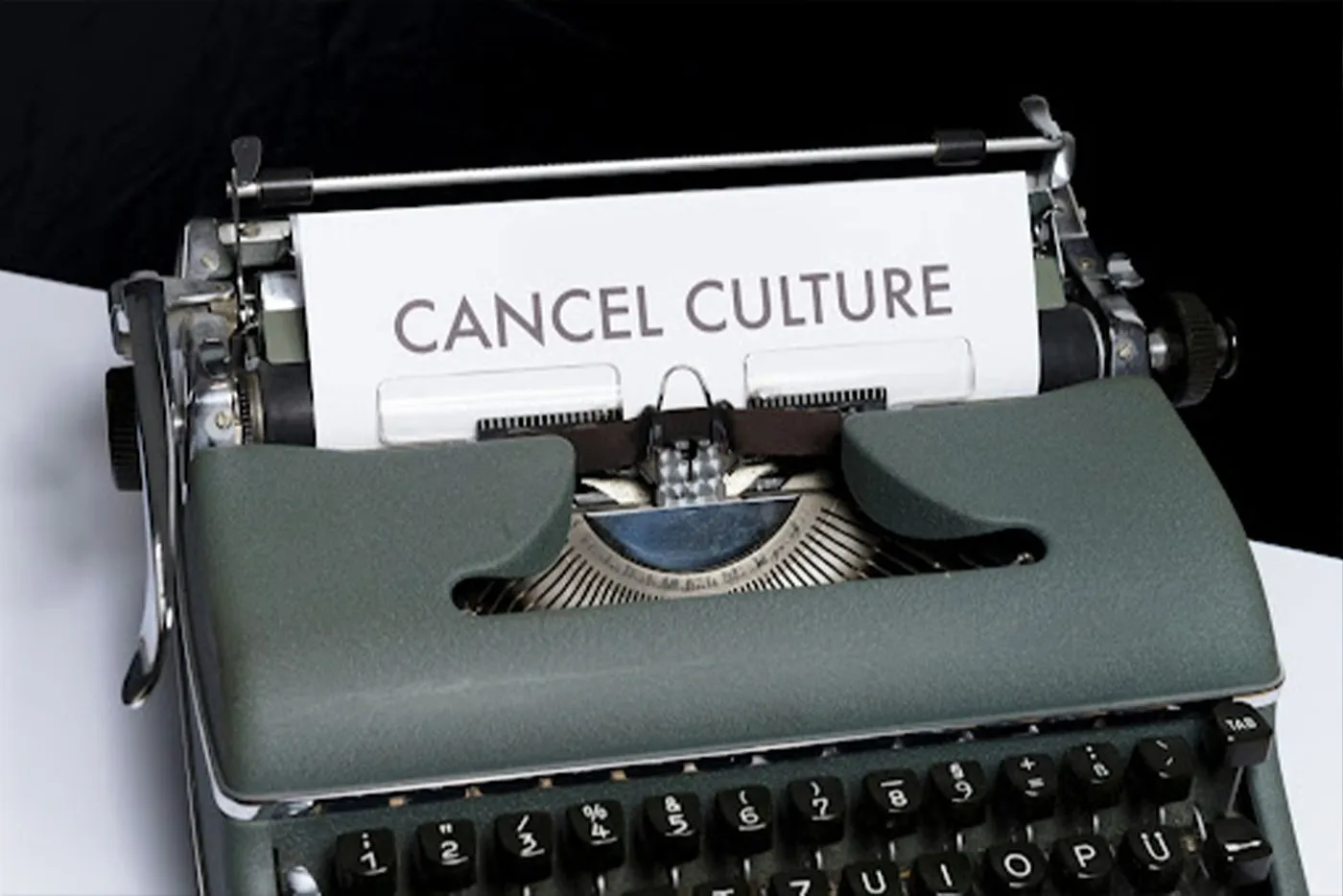
“Cancel the Cancel Culture”
A scene as simple as that from the Scary Movie 6 trailer can easily spark online outrage because viewers are prone to react to surface details rather than looking deeper. It is important to remember that satire, by design, operates through exaggeration and irony, using certain matters or scenarios as vehicles to drive a larger commentary. To truly appreciate and understand satire, we must always look beyond the immediate provocation and ask ourselves, “What is the real target of what is presented?” If we only respond to the obvious, we’d miss the point entirely.
This is indicative of a larger cultural shift toward suppressing challenging content rather than engaging with it. To preserve the integrity of satire and its crucial societal role, we must resist the impulse to cancel and instead advocate for robust, critical discussion. Satire thrives when it is permitted to provoke, offend and illuminate. Cancelling it only impoverishes public discourse and weakens our collective critical faculties. True satire cannot exist if it is tailored to support or attack a single narrative; when this happens, it ceases to be satire and instead becomes propaganda.
The power of satire lies in its ability to address all sides of an issue. But to recognize this is to think critically and not settle for surface-level interpretations. Satire is effective if rooted in its ambiguity and refusal to offer simple answers or clear heroes and villains. The elements chosen, character, scenario, or social issue, are often not the real targets, but only the tool meant to highlight deeper absurdities. When we reduce satire to a way of advancing a particular agenda, we forfeit its unique ability to illuminate the contradictions inherent in all perspectives.