New Look Activism – Activism or Performance?
Welcome to 2026. Have you bought the latest essentials yet? Surely, you’ve updated your awareness rotations. Black History Month has come and gone, and its banners have been neatly folded in time for Women’s History Month. But don’t stray too far – more are queued up next in the cultural schedule. Not to mention, issues that will come up unexpectedly in your feed. Causes may surge online at any moment, so it’s best to stay prepared.
As banners are taken down and hashtags sink to the bottom of the Trending list, it is only reasonable to suspect the motives behind these cycles of activism. We start to question if the attention generated by them actually results in change, or does it simply mark another round of performative activism.
This has already been seen happen during the summer of 2020, when corporations and public figures – from Hollywood celebrities to social media influencers – rushed to post black squares on Blackout Tuesday, to demonstrate their solidarity with Black Lives Matter following the brutal killing of George Floyd. While these gestures brought attention to systemic racism and police brutality, follow-through was often lacking. Today, we see a sort of remnant of this ideology. Only now worn in tailored themed gowns and suits on the red carpet or cut in a 0.75 mm pin. But at the end of the night, the dress is taken off, and the pin is removed. And with it, the performance of support is shoved right back in the closet.
The focus had once again shifted away from genuine allyship and toward fleeting, surface-level solidarity that prioritized appearance over action. Whereas performative activism displayed the superficiality of over-visible advocacy, we have now entered the era of privilege activism, where individuals or organizations with social power or distance from an issue adopt politically correct stances that may be perceived as for the sake of appearances rather than out of a sincere desire to effect change.

Christopher Polk/Penske Media
Fashion and Celebrity as Activism Catalyst – Or Costume?
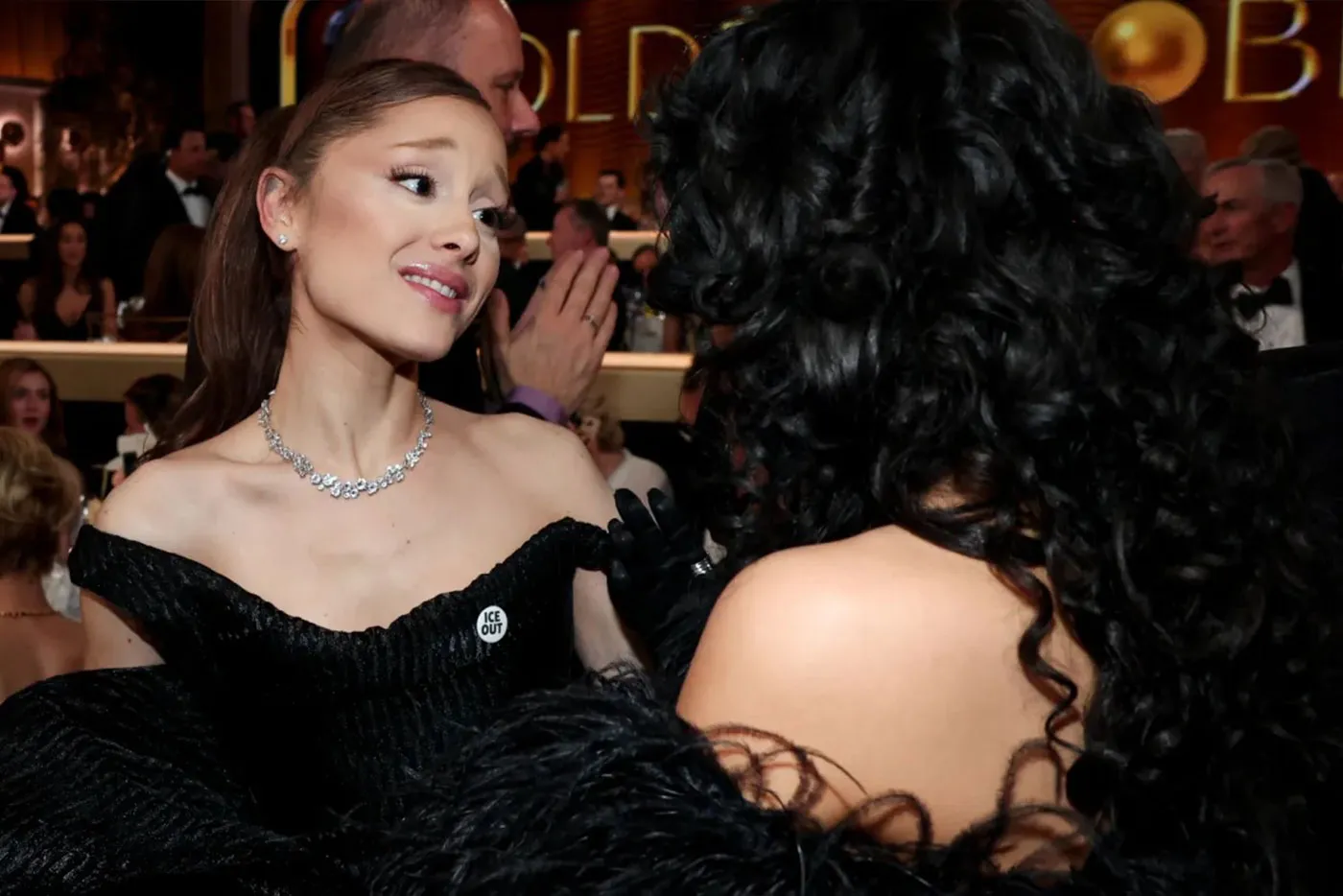
The red carpet has become the central arena for this reactive activism, where celebrities and fashion icons make bold statements through their attire. Designers, influencers, Hollywood elites and companies are quick to don the latest cause with keffiyehs, “ICE Out” and ceasefire pins.
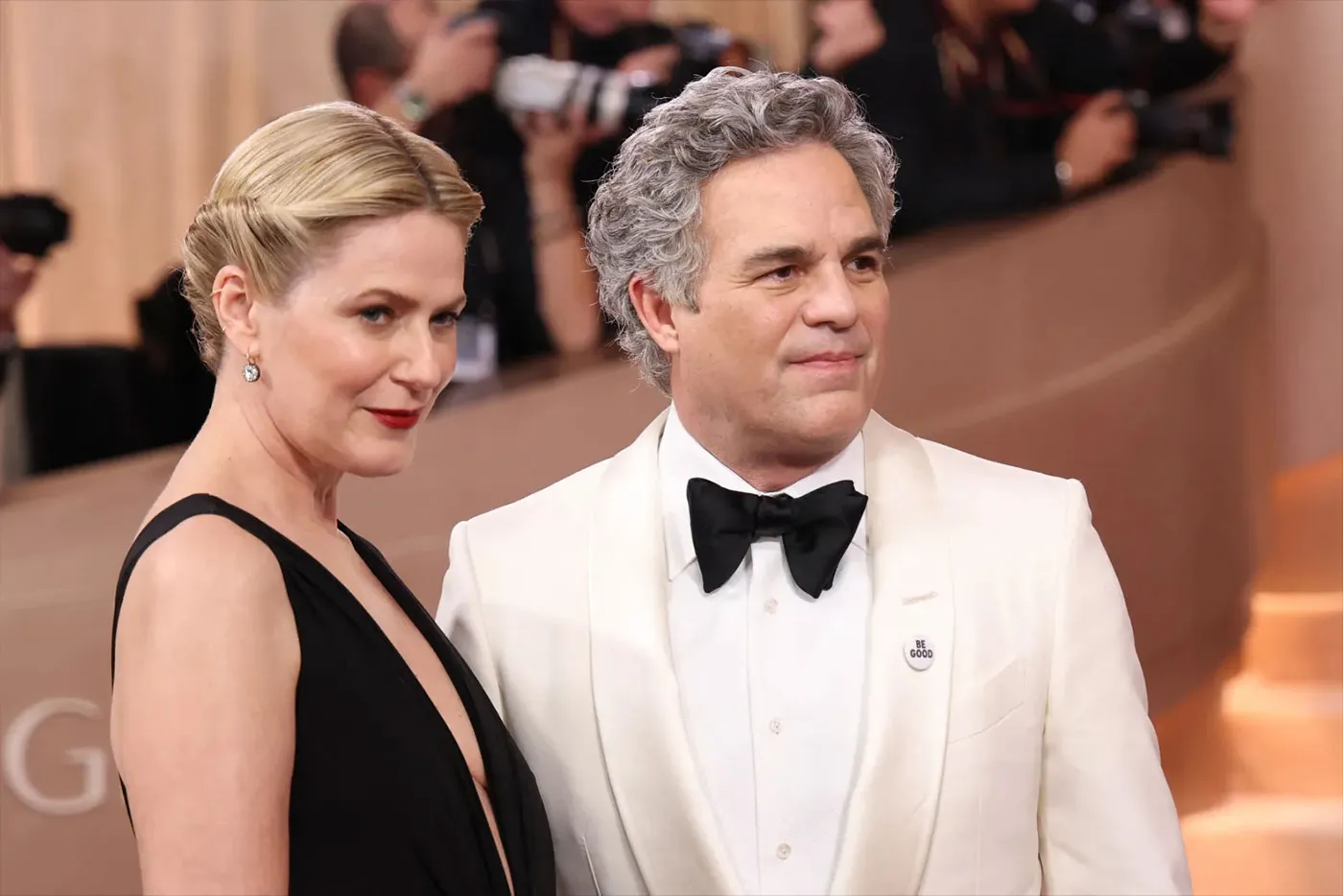
Several high-profile examples from the past two years demonstrate this phenomenon. At the Oscar Awards in 2024 and at the Grammy Awards this year, Billie Eilish wore pins referencing calls for a ceasefire in the Israel-Palestine conflict and the abolition of ICE. In 2025, Actor Javier Bardem appeared at the Primetime Emmy Awards wearing a keffiyeh scarf in solidarity with Palestinians. Similarly, Mark Ruffalo has repeatedly worn protest pins at the Golden Globe Awards and other red carpet events.
This sort of activism-themed fashion has made public acknowledgement of causes almost synonymous with meaningful participation. In an era of short attention spans, the ability to shape public discourse depends on visual presence. The more visible the gesture, the more likely it is to spark conversation, mobilize support and pressure institutions for change. However, the rapid pace and surface-level nature of displays raise critical questions about the depth and durability of such activism.
While it may be true that these displays can raise awareness and spark necessary conversations, they rarely result in sustained activism or policy change without ongoing, direct action. The most it does is an article written the next morning, which will then be replaced the following day by the next story, the next viral moment, the next carpet.
In that sense, the political symbol functions less as an intervention and more as a short-lived detail within celebrity coverage. So does it really matter what they wore on the carpet? Most of the time, these pins are little more than a footnote in articles primarily more interested in their wins and losses of the night or in the archival designer gowns they wore, which will at most appear in the best- and worst- dressed lists.
Even when the symbol is noticed, its presence seldom provokes deeper inquiry.
Michael Tran/Getty Images
What Is Enough?
What can we really take away from knowing that these public figures support these causes? Are these gestures intended to signal awareness, or are they meant to actually make something happen? These are the questions that inevitably pass through one’s mind when seeing such displays. A celebrity steps onto the carpet, a 0.75 mm symbol pinned neatly to their lapel, and the cameras flash. But what is the intended outcome of this moment?
The lack of a definitive stance of these gestures is precisely what makes them so easy to circulate and so difficult to evaluate. A declaration of support exists, but it doesn’t extend beyond that recognition. The statement is made, the image is reposted, and that is it.

These actions are really only restricted to high-profile individuals, and that’s partly because they’re the most visible in our culture, but also because they have the privilege and resources to do so. Only those with substantial social and economic capital can make a political statement at an exclusive, thousand-dollar event simply by wearing a symbolic accessory. On the red carpet, activism becomes something that doesn’t challenge the very institutions that support it – it is a display that fits in rather than disrupts. When celebrities wear protest pins or similar symbols, it is often less about taking real risks and more about publicly aligning with a cause that costs them little. In this environment, we end up celebrating celebrities for these minimal gestures, idolizing them for doing what regular people couldn’t get away with, and rewarding visibility over genuine effort.
Within these discussions, the gesture is not always criticized because the cause itself is unimportant; rather, the critique focuses on the perceived gap between the scale of the issue and the minimal nature of the symbolic response. The symbolism of a discreet pin – while visually potent – therefore becomes a point of debate.

Etienne Laurent/Getty Images
The Celebrity Trap
Public commentary often returns to the same question: what distinguishes a symbolic declaration from meaningful advocacy? While the presence of a symbol can introduce an issue to wider audiences, there are some who argue that “real” activism requires actions that go further than what was captured by the camera. When the symbol itself must be zoomed in on a photograph to even be noticed, some observers suggest it raises a final question whether the gesture was intended to confront injustice directly, or simply coexist alongside the glamour of the event that is undoubtedly perpetuating the same cycles of hierarchy within society.
With privilege, there is a decision that must be made on who gets to participate without repercussion. Those holding higher titles wield the power to make causes visible through a single accessory, often without the consequences that frontline activists endure. Even those who attend protests and share involvement only may be seen as performative if their actions are obviously about optics rather than impact. The ability to engage in bare minimum activism, such as wearing protest pins at exclusive parties, highlights how social and economic capital can insulate participants from judgment. This form of advocacy allows privileged individuals to be virtuous while avoiding the uncomfortable and the pushback from the industry they occupy by confronting injustice.
This is a complicated reality. Visibility, undoubtedly, can illuminate an issue but can also obscure it. From red-carpet protest pins – advocacy exists within the same circuits of attention that drive entertainment and digital culture. Symbols travel quickly, images circulate widely, and such declarations can reach millions within moments. Yet the speed that makes these gestures powerful can also risk reducing activism to something that only brushes against your hands.
It is almost impossible not to react. When these moments are constantly pushed into our feeds, onto our screens, and into our conversations, a response feels asked. Is it performative or not? Both the question and the answer lead nowhere. Entire conversations become devoted to evaluating the sincerity of these acts rather than confronting the issue they reference. Ironically, the act of sitting in front of our screens curating opinions about these displays can mirror the logic of performative and privilege activism itself, where engagement exists only in commentary rather than action.
Before we all might get trapped in this loop, the more productive response may be to redirect attention toward the issues themselves. The visibility made by symbolic activism can still serve a purpose, not as the endpoint, but as a starting point. A start to look beyond the image, learn more about the cause, and engage with it on our own terms rather than simply aligning ourselves with what is presented on the surface. In the end, the blame lies both nowhere and everywhere.