Oscar’s Best Picture – One Battle After Another
At last, we can wipe the sweat from our brows and log off X, formerly Twitter, as the 2026 Academy Awards or The Oscars, have announced its top contender of the night, Paul Thomas Anderson’s One Battle After Another. Winning Best Director, Best Adapted Screenplay, and Best Picture all in one night, One Battle After Another established Anderson as a member of the pantheon of filmmaking legends.
The film follows Ghetto Pat Calhoun (Leonardo DiCaprio) in a fictionalized America, who has been forced into hiding from being part of a militant revolutionary group as he tries to protect his daughter from his past and from her future in an extreme authoritarian regime. For those who celebrated the win, the film’s narrative-driven portrayal of revolution is its greatest asset, prioritizing the emotional journey of a father rescuing his daughter over a hyper-realistic, reference-laden depiction against authoritarianism. Yet those who were unhappy saw this as a shortcoming, arguing that the film “missed an opportunity” to establish a strong direction in taking a clear stance against the politics it seemed to be calling attention to.
In response to the ongoing discussion surrounding the film, Anderson succinctly remarked, “[Our film] obviously reflects what’s happening in the world.”
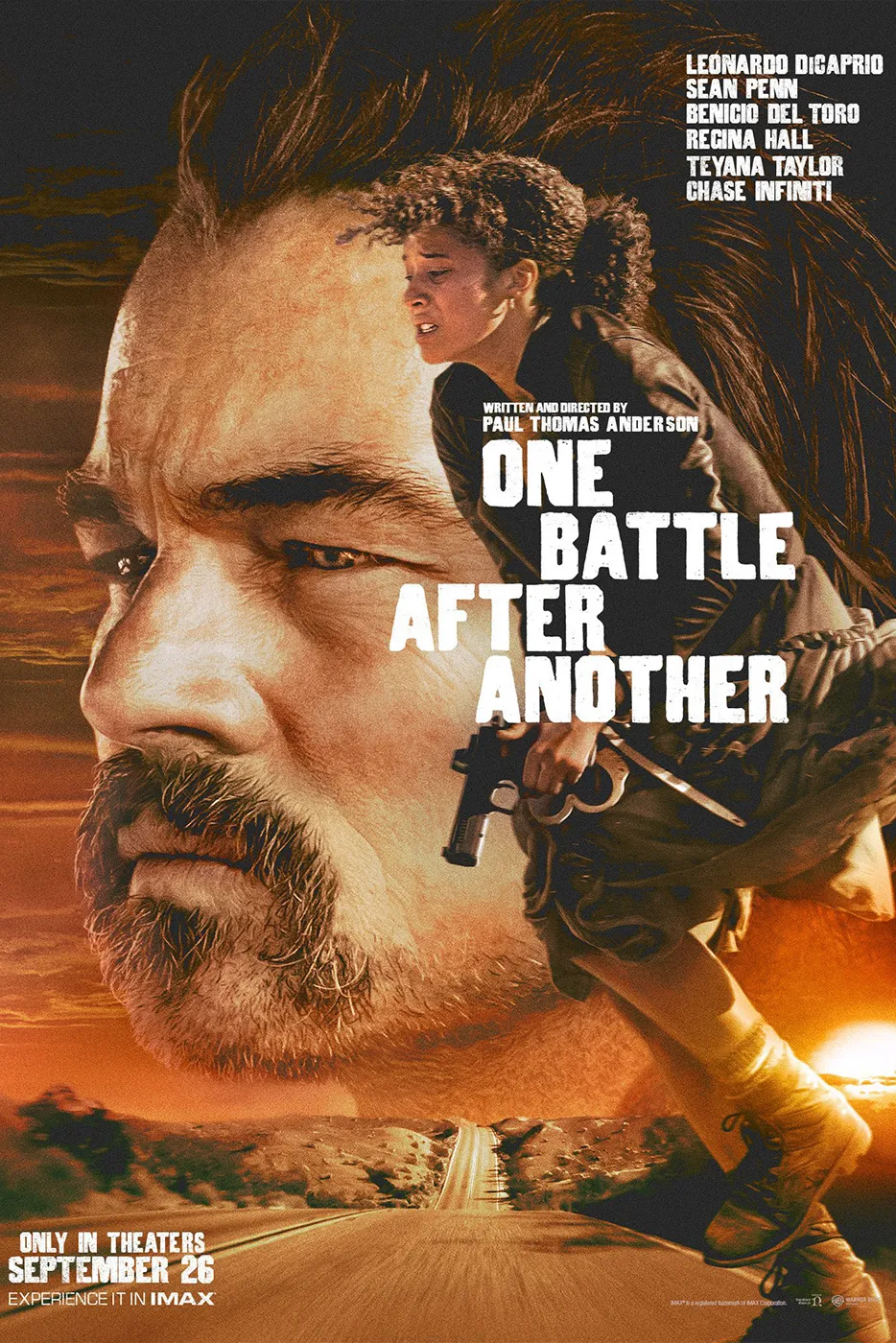
One Battle After Another (2025)/Warner Bro. Pictures and Ghoulardi Film Company
The Battle After the Win
Anderson’s sweep was met with a collective sigh of relief as many turned to X to celebrate his long-awaited win. Because the Academy has historically disregarded Anderson’s work, it could be that the win was less about the work itself but was a necessary reward for his exceptional career. With this, the win honours his longstanding contributions to cinema, regardless of the specific merits of this particular film. Still, the reaction remains divided, with ongoing debate about whether the film was truly deserving of such high recognition.
A significant portion of viewers have criticized the Academy for rewarding a work and a director who deliberately avoids taking a concrete political stance, especially on themes that are used in the film. This hesitance, like Anderson’s own stance, is seen by some as sidestepping responsibility. The film’s approach is seen as evasive at a time when audiences expect art to make bold, unwavering statements.
The tension between creativity and explicit political agenda is at the forefront of today’s artistic battleground. The arts, or films in this context, are increasingly supervised not just for their artistic merit but for their ideology. This expectation, then, raises questions on authorship and legitimacy. In narrative and ideological positioning, realism has become a litmus test for authenticity, prompting questions about whose stories are told, and by whom. As a result, legitimacy depends on whether the filmmaker’s voice aligns with the lived realities depicted in the art.


Kevin Winter/Getty Images
The Academy’s decision, including Anderson’s numerous wins, mirrors this complicated landscape. While it may not have fully asserted directorial freedom in the traditional sense, it did attempt to address the issues it wanted to raise. The central story of a Ghetto Pat rescuing his daughter serves as a powerful allegory for older generations grappling with the consequences of their actions and the world they’ve shaped for future generations. Set against the backdrop of an authoritarian regime, Ghetto Pat’s struggle symbolizes the challenges of passing on the right values in an increasingly hostile environment. Just because the film did not directly challenge all agencies or engage in direct, explicit dialogue as some audiences expected, it is disingenuous to ignore all the times it hinted at it.
Some wanted bolder. Some wanted it exactly as it was. All have overlooked that the film had already done its part.
All in all, we might as well be all wasting our breath in this debate, as we address the real elephant in the room. Anderson’s win is as much about his previously unrewarded career as it is about the legitimacy of the film. His critically recognized films, such as Boogie Nights, Punch-Drunk Love, Magnolia, and There Will Be Blood, have famously fallen short of receiving the highest honour on award nights. As such, this achievement may just be to monument his career to a status that he duly deserves.