Maya Angelou and the Power of Voice
Dr. Maya Angelou occupies a singular place in American cultural history, not only for what she created but also for how seamlessly her life moved among art, politics, and public consciousness. Her voice, both written and spoken, carried the weight of lived experience shaped by segregation, displacement and survival. Yet it was delivered with a clarity that felt expansive, rather than confined by trauma.
Emerging in the 1950s, when Black voices were routinely marginalized or softened for broader appeal, Angelou refused to be diluted. Her poetry, memoirs and public addresses articulated Black womanhood with elegance and precision, insisting on dignity, without apology. At the same time, her presence extended beyond the page. Angelou worked alongside civil rights leaders, represented the United States abroad and became one of the most recognizable cultural speakers of her time, translating political struggle into language that resonated across borders.
To speak of Maya Angelou during Black History Month is to engage with a legacy rooted in cultural authorship. She understood that art could function as record, resistance and refinement all at once. Her work continues to inform how Black identity is expressed in literature, performance and public life, shaping what is said and how it is carried.
Reading Angelou today, it is difficult not to feel how present her voice still is. Many writers are remembered, but few feel as though they are still speaking.

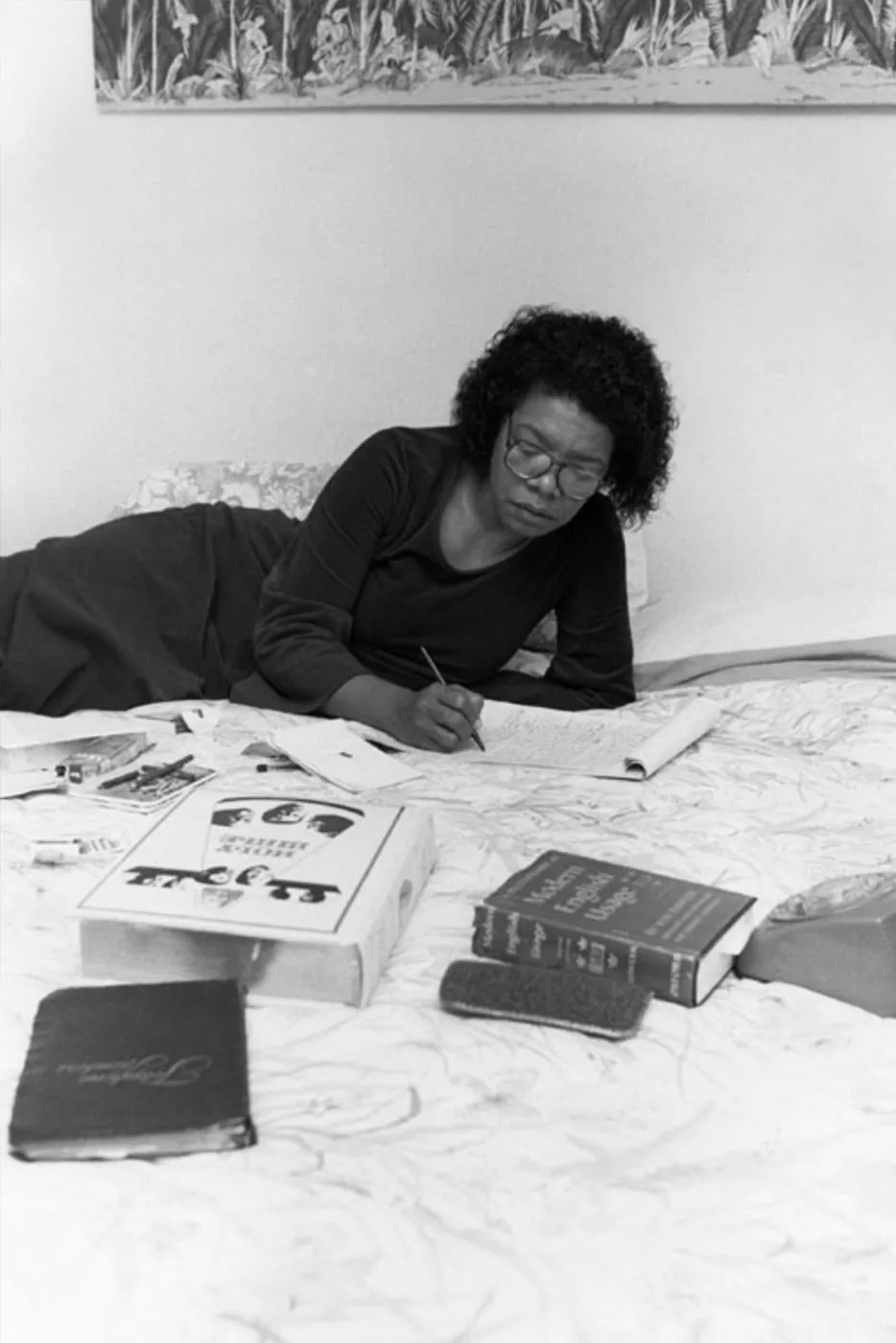
Courtesy Johnson Publishing Comp
A Life Shaped by Movement
Angelou was born Marguerite Ann Johnson in St. Louis, Missouri, in 1928. She moved a lot between Southern states and West Coast cities. Most of her childhood was spent in Arkansas, where she lived with her grandmother in a segregated community. Those early environments would later surface throughout her writing with directness.
At age eight, while living with her mother in St. Louis, she was raped by her mother’s boyfriend. Angelou stopped speaking for several years after testifying against her attacker, who was later killed upon release from jail; she believed her voice had caused his death. She also experienced parental abandonment and racial discrimination. When her voice eventually returned, it came back with a burning passion and much intention. Reading and writing became something for her before it ever became something for the world, forming a relationship to words that emphasized care and control.
Her early adulthood unfolded a series of creative and professional shifts. In San Francisco, California, she became the city’s first Black female streetcar conductor. She trained as a dancer and singer, performed internationally and worked across theatre and music. By the late 1950s and early ‘60s, Angelou began to take her writing seriously as she became deeply involved in the civil rights movement. She worked with organizations tied to Martin Luther King Jr. and Malcolm X, and later lived in Ghana as part of a growing community of Black artists, thinkers and activists.
Over the decades that followed, Angelou continued to publish poetry and autobiographical volumes while maintaining a public presence as a speaker and performer. She received national honours, including the Presidential Medal of Freedom, and spoke at historic public moments.
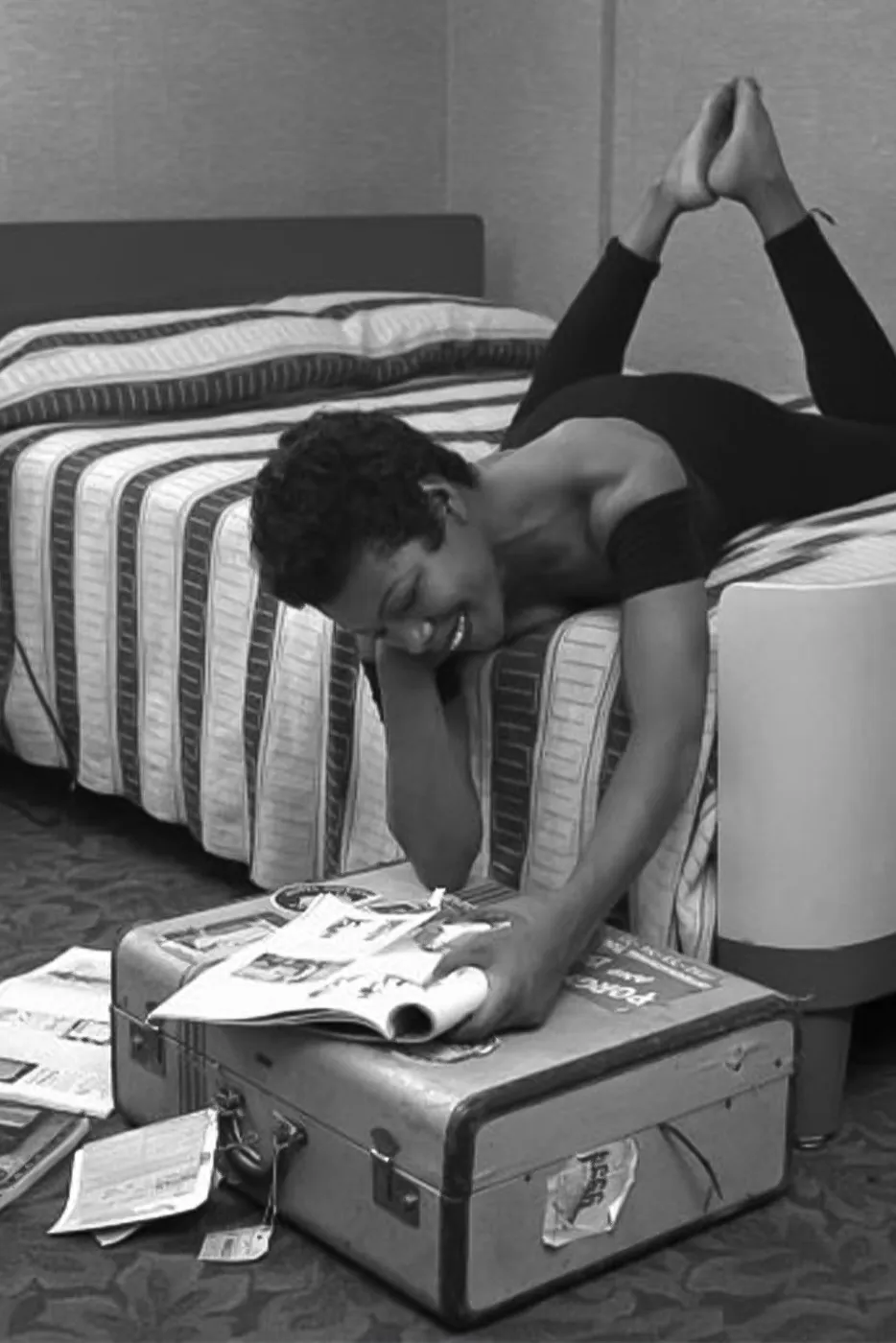
Courtesy of Jonsaba Writes
Reading Angelou
Across poetry, memoir and activism, Maya Angelou saw literature as a way to capture real experiences. For her, being a Black woman meant facing racism and sexism together, where the forms of oppression combine and shape each other.
Angelou embodies intersectionality by engaging directly with these interconnected realities, refusing to separate gender from race and illustrating how Black women exist within complex hierarchies that control their visibility. She does this while rejecting the illusion of objectivity that has traditionally favoured male and white viewpoints as universal.
Angelou’s writing questions whether art can ever be neutral. She argues that every voice is shaped by its context and all art is influenced by gender and power. This way, Black women’s voices are not just additions to history, but vital to telling it.
The Weight of a Voice
When I Know When the Caged Bird Sings was published in 1969, it offered something rarely offered to Black women in America: freedom and space. Angelou’s memoir moves through childhood, racism and survival without softening its edges or reshaping experience to meet expectations. The book does not explain itself to the reader. It allows and trusts the reader to sit with all of the discomfort, silence and observation as part of its truth.
Courtesy The Associated Press
For Black readers, especially Black women, I Know When the Caged Bird Sings resonates because it reflects the interior life of what it means to be Black in America. Angelou wrote about girlhood, trauma, faith and self-definition with a steadiness that felt honest and raw. Her voice made room for vulnerability without asking for permission and, in doing so, expanded what Black storytelling could look like in the literary mainstream.

More than 50 years later, I Know Why the Caged Bird Sings continues to hold cultural weight. Its power lies in what it observes and leaves intact. Even now, the book feels less like a relic of another era and more like a conversation that never really ended.
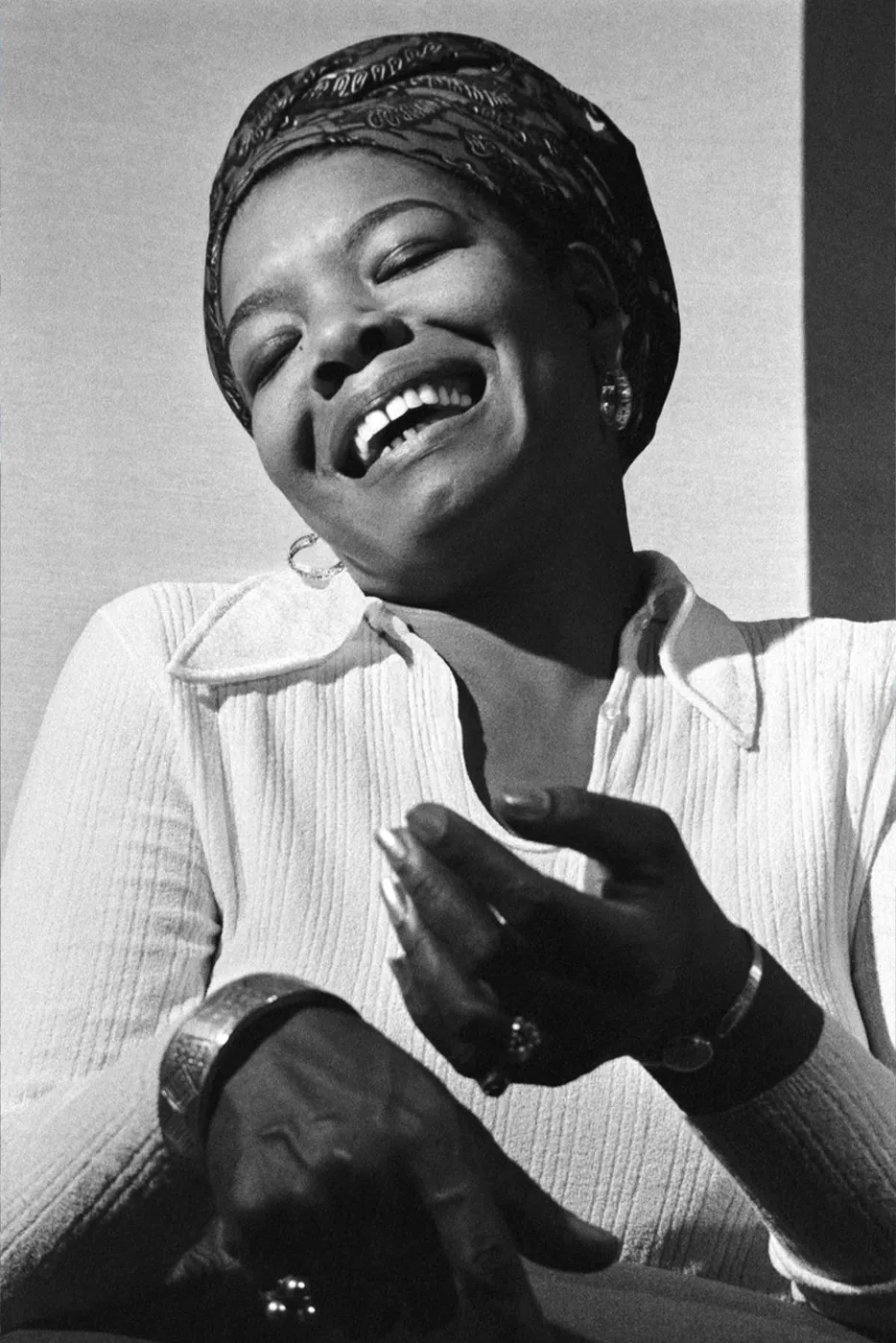
Courtesy Chester Higgins
Comparing Still I Rise, Phenomenal Woman, and Caged Bird
To understand Angelou’s impact, it is important to analyze how she exemplifies Black feminist ideas in Still I Rise, Phenomenal Woman, and Caged Bird.
Still I Rise is a major work in African American and feminist literature. Consisting of nine stanzas, the poem transforms areas of scarcity into symbols of richness. These visuals underscore its core messages of self-worth, confidence and resilience, emphasizing that Black women need not apologize for their presence. Surviving is a form of resistance.
In Phenomenal Woman, Angelou pushes back against narrow beauty standards and patriarchal views by celebrating the Black female body. She defines power as self-awareness and presence, not fitting into ideas of thinness, delicacy or needing men’s approval. The poem acts as feminist activism by showing that Black women are powerful when they define themselves.
Caged Bird moves from affirming to critiquing structure. She compares freedom and containment to illustrate how oppression operates through societal barriers. Here, having a voice is always a way to survive. The caged bird sings not because it is free but because it is not, reminding us that expression is claimed, not granted, by those in power.
Together, these poems serve as an archive of Black womanhood. Angelou’s writing made literature into a space of collective memory and political statement, leaving a legacy that still shapes perceptions of power, identity and liberation.
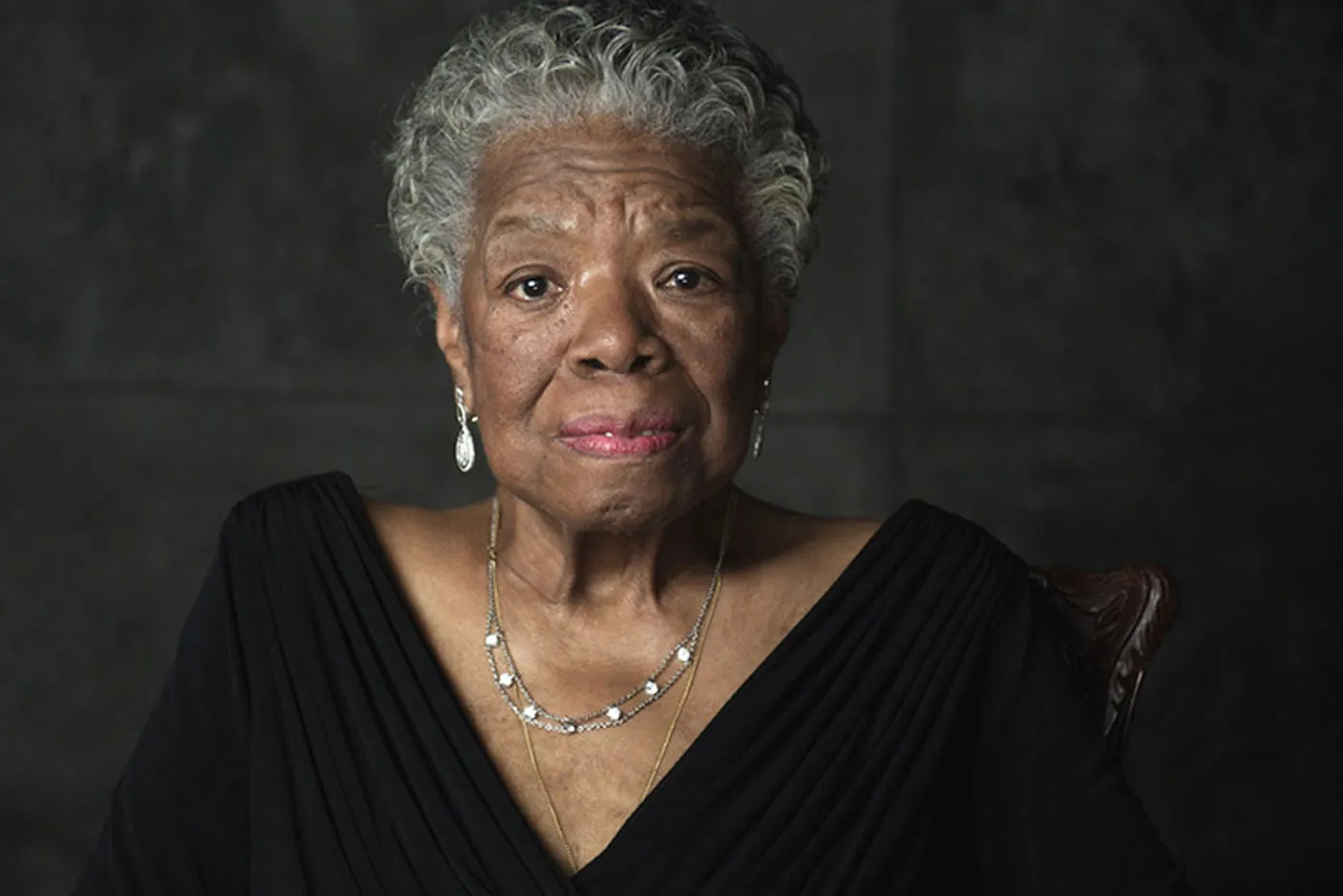
Courtesy Alex Banayad/ Oprah.com
Double Prejudice in Black Womanhood
Angelou’s work directly addresses Black women who have been marginalized by mainstream feminist movements that focus on white, middle-class concerns. While those movements often treat gender as the sole source of oppression, Angelou revealed how such perspectives overlook women whose lives are equally affected by race and economic disparities.
Angelou’s feminism challenges patriarchy as a system of power, but she insists that this critique must be rooted in the real lives of Black women. She shows that fighting patriarchy also means tackling the racial and economic systems that support it. For Black women, oppression is not just an idea, but a part of daily life seen in work, poverty and being watched or silenced.
By openly celebrating Black womanhood, Angelou became a strong voice for women of colour who are often excluded from feminist and literary spaces. She did not seek to be included in existing frameworks; instead, she transformed them. Her work affirms that feminism is incomplete without Black women’s experiences and that real freedom must include everyone.