Sustainability Unpacked Part 6 – Avatar Fire and Ash and the Fragility of Nature
This article is a part of Funktasy’s Sustainability Unpacked series, where we tackle all sides of the sustainability discourse within music, fashion and lifestyle.
When Avatar: Fire and Ash (2025) begins, Pandora already feels familiar. Not because it’s Earth, but because it feels lived in, scarred and fractured in ways that don’t belong only to fantasy. Director James Cameron has said the film explores grief, loss, trauma and the difficulty of breaking cycles of violence, themes that feel eerily relevant to real-world ecological and social crises.
Cameron didn’t pick “Fire and Ash” as a cool fantasy name. In press for the film, he explained that fire represents “hatred, anger, violence, possible misuse of power,” while ash symbolizes their aftermath. “Grief and loss, and what comes next.”
This is a movie about how destruction extends beyond spectacle.

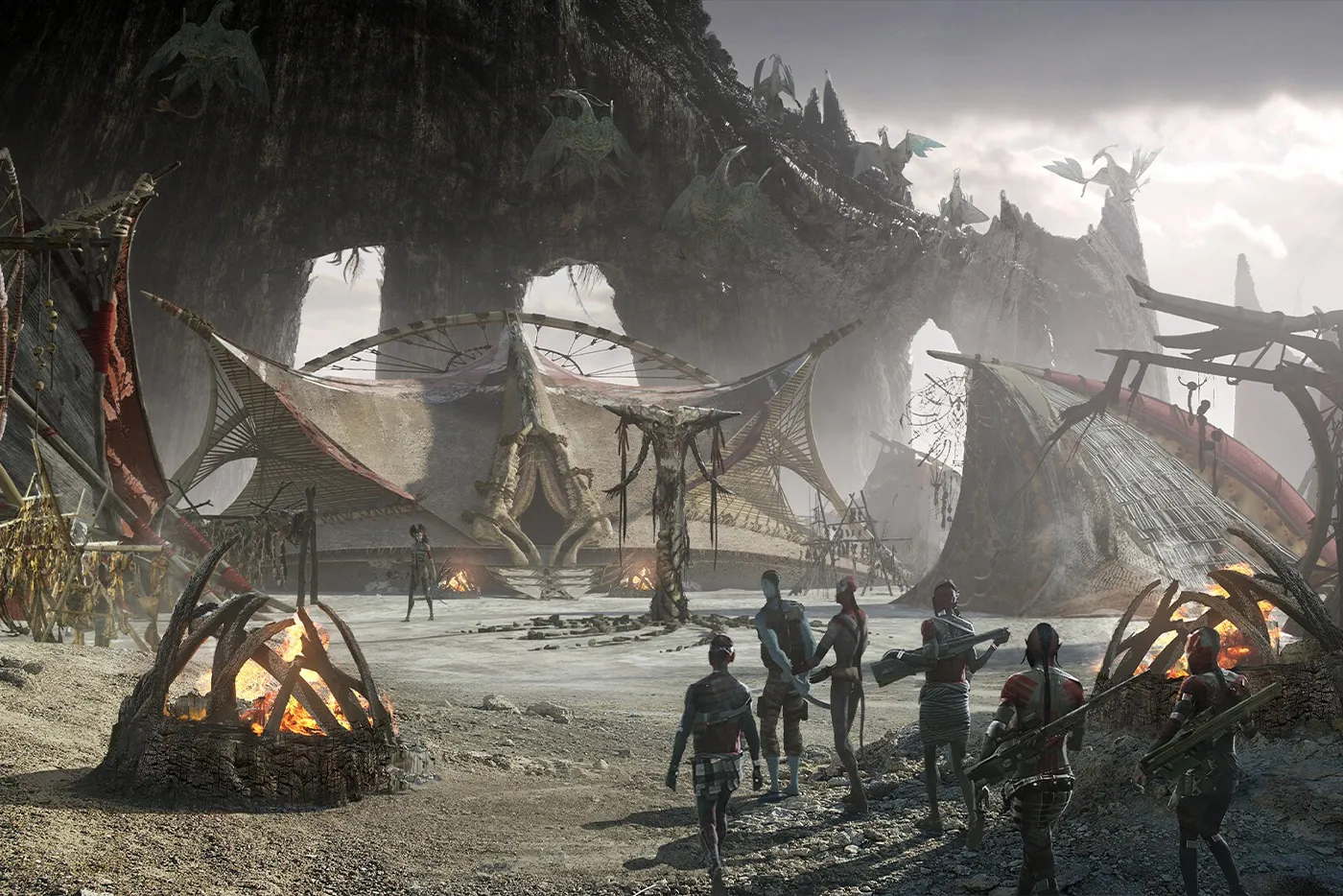
Illustrated by Steve Messing
A Story of Patterns, Not Endings
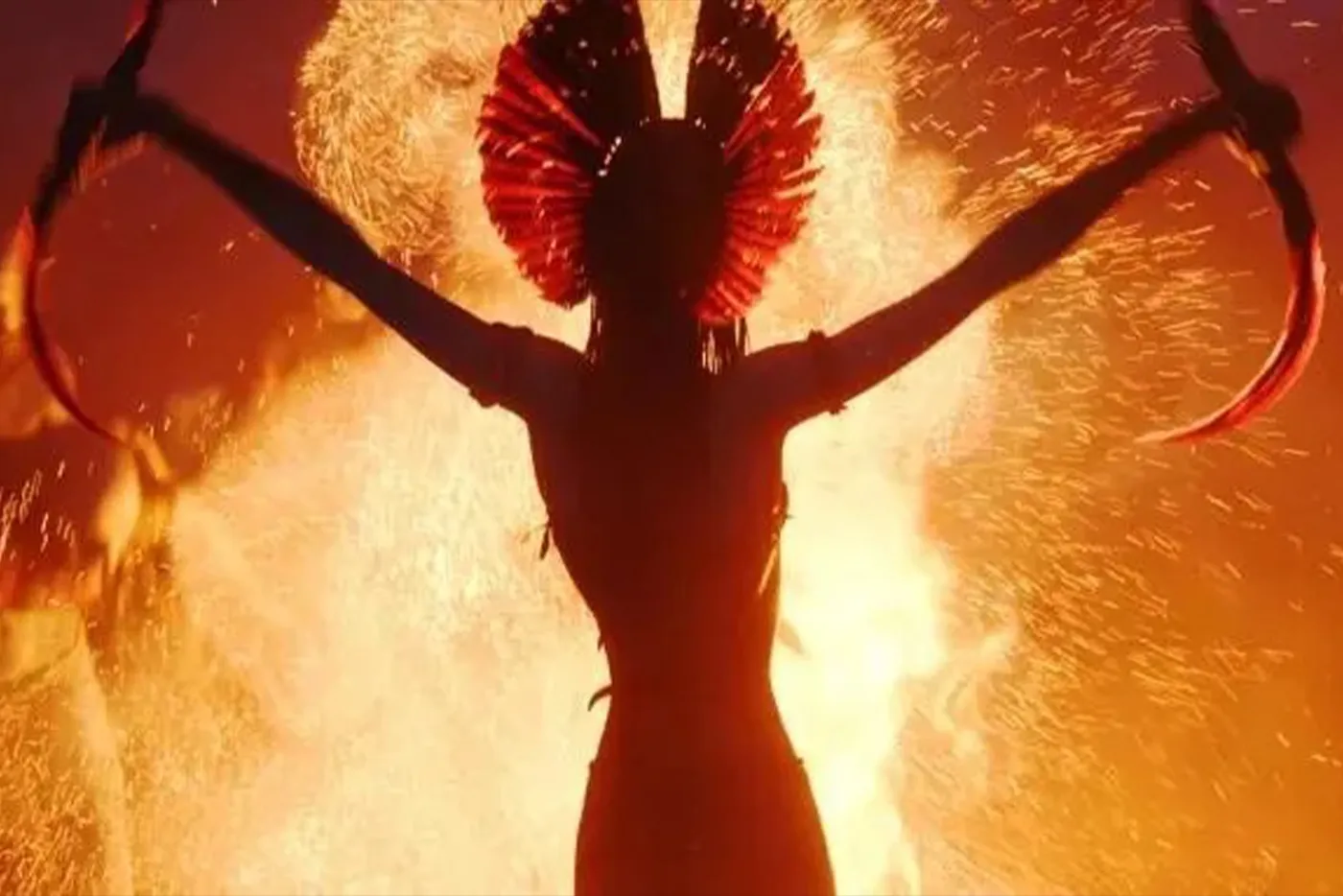
Early in the film, Varang, leader of the Ash People, declares, “I am Fire! We don’t bend down and just die because Eywa turns her back on us!” This line defines what the title Fire and Ash represents, culture shaped by trauma has lost its way.
Varang’s cynicism toward Eywa, Pandora’s life network, echoes real conversations about environmental abandonment. Some Na’vi clans see nature as a partner. Varang’s tribe sees it as indifferent, a force that destroyed their home. The result is not reconciliation but radicalization.
This isn’t environmental mysticism. It’s grief weaponized as ideology, and it makes the Ash People as much a product of Pandora’s wounds as the Sky People are of Earth’s exploitation.
The line “Your goddess has no dominion here,” Varang said when she holds Spider at knife-point, underscores the emotional logic of betrayal.
Cameron himself frames the film around these emotional landscapes. In multiple interviews he’s described Fire and Ash as a film about processing loss and how loss perpetuates cycles of violence. Cameron has directly tied this statement to contemporary global tensions.
Credits: Forbes
The Sky People and Our Reflection
The Sky People, the humans from Earth, no longer feel like obvious villains in Fire and Ash. Instead, they’ve integrated into Pandora’s systems and normalized their presence. They justify fire as efficiency and ash as acceptable collateral, not unlike how industrial nations frame environmental degradation as necessary development rather than damage.
James Cameron said in an interview with Benjamin Lindsay on The Wrap that this film “holds a mirror to the human race … showing our greed and the willful destruction of nature.” In his words, the movie allows audiences to “see ourselves through that lens” and question daily choices.
The disconnect between human intent and planetary impact is literalized in Spider’s arc. A human child raised by the Na’vi, Spider nearly suffocates when his oxygen source fails, an unexpected reminder that the planet doesn’t simply bend to accommodate humanity. Only when Kiri, connected directly to Pandora’s living network, intervenes does Spider survive.
Credits: Forbes
Kiri, Eywa, and the Limits of Rescue
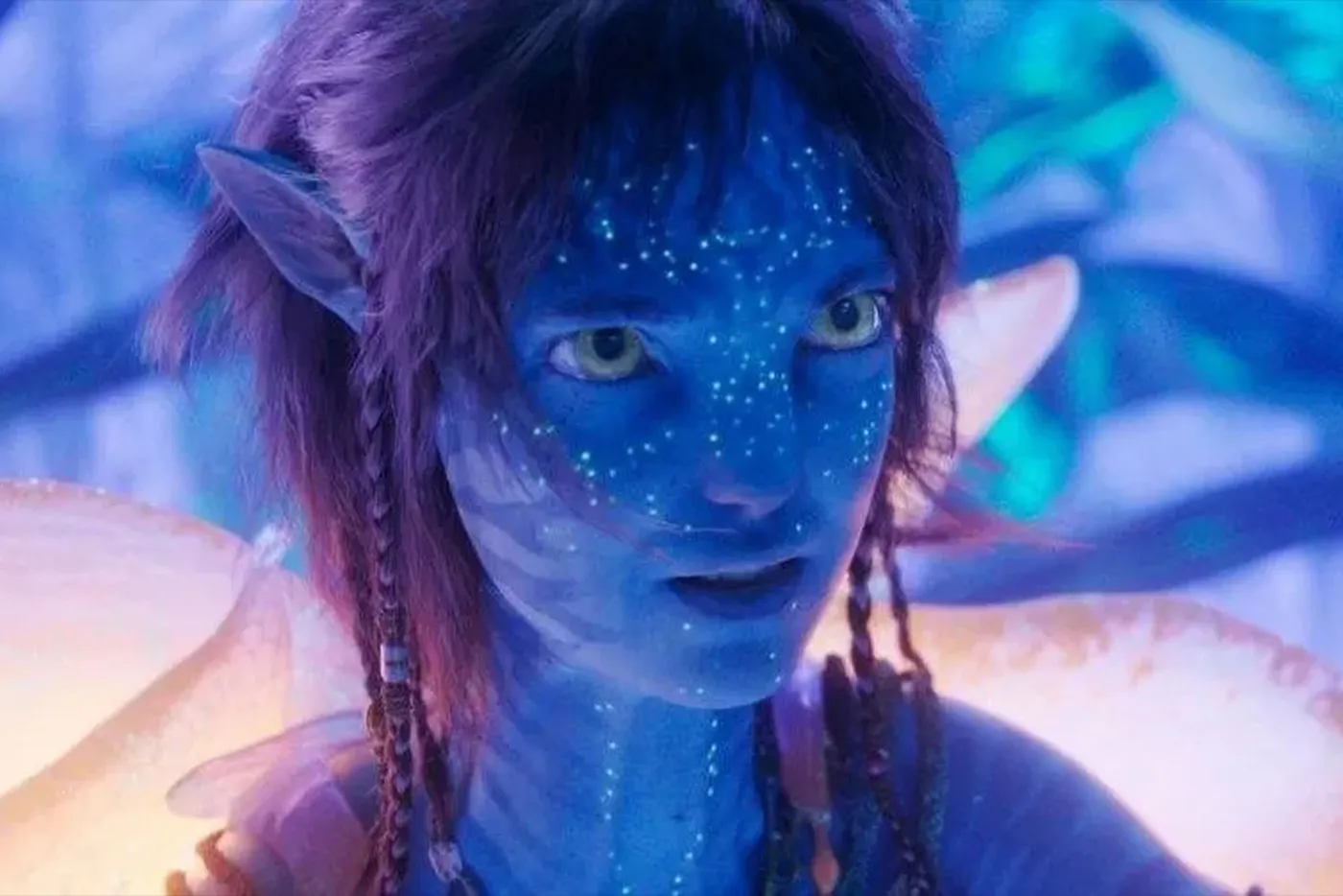
Kiri’s revelation that she is biologically tied to Eywa reframes Fire and Ash as a spiritual as well as an environmental story. She isn’t human and she isn’t merely Na’vi. She embodies Pandora’s memory and consciousness.
When she uses her connection to save Spider, effectively adapting his biology to breathe Pandora’s air, the moment carries metaphorical weight. It shows conditional acceptance. Pandora chooses what will survive, not because it must, but because it knows. That theme resonates strongly with how Earth responds to human pressure. Certain systems adapt, while others collapse.

Cameron’s use of these mythic, spiritual motifs isn’t accidental. In an interview with Molly Edwards on GamesRadar, Cameron emphasized that Fire and Ash is not a traditional blockbuster about good versus evil. It’s a story about loss and how people and societies try to heal, often imperfectly.
Fire and Ash as Emotional Ecology
“This world goes much deeper than you imagine,” Jake Sully says at one point in the film, a line that gestures toward Pandora’s complexity and, by extension, our own world’s fragility.
The film’s emotional arc refuses simple resolutions. Battles rage amid volcanic terrain, not because good has finally defeated evil, but because power without understanding reproduces destruction. Neytiri’s slow release of hatred toward Spider, someone she once could not forgive, isn’t depicted as naive forgiveness, but as a necessary step toward survival.
In the final sequence, Kiri and Spider’s journey into the spirit world doesn’t erase the war. It suggests that healing is an ongoing process and not just a moment of victory.
That speaks directly to real climate issues. Even if humanity were to act decisively tomorrow, the legacy of greenhouse emissions, species loss and environmental degradation would remain. The damage isn’t theoretical. Plastic pours into the ocean at an industrial scale. Forests that once anchored ecosystems have been steadily erased. Species are vanishing faster than they can be documented. Air pollution has become so normalized that its death toll barely registers as news. None of this glows the way Pandora does, but the consequences are just as permanent.
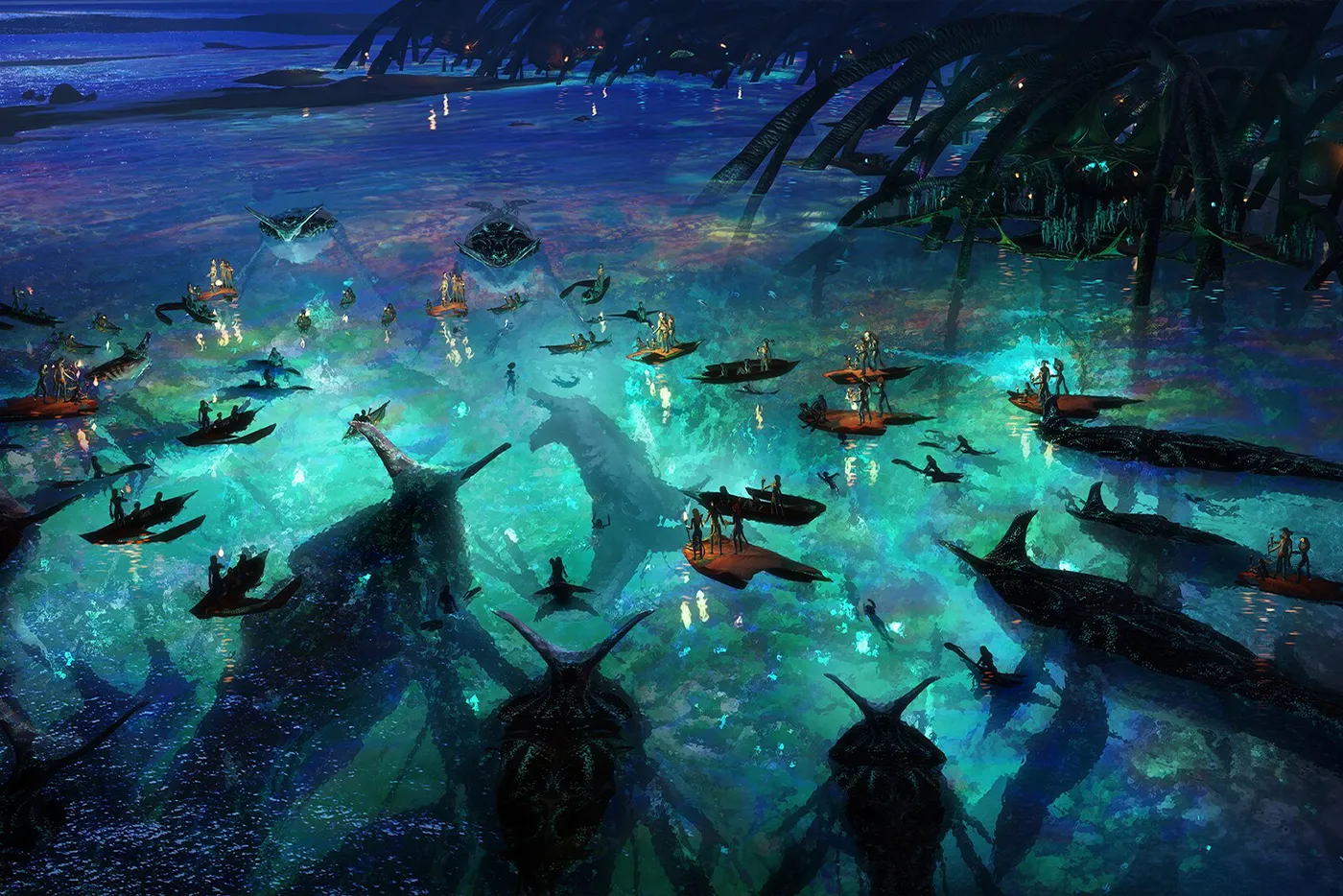
Illustrated by Dylan Cole
Why This Matters Outside the Theater
Cameron didn’t make Pandora because he wanted audiences to feel guilty. He crafted a world where spectacle evokes identification and identification leads to reflection, a strategy he’s used since the first Avatar. In 2009, he described Pandora as a “fictionalized version of Earth before we began to destroy it.” The idea was straightforward. People protect what they love.
In the end, the film doesn’t promise a cure, but it offers a moment of honest recognition. Fire scars. Ash remains. What we choose to do with the ash, whether we let it define a new cycle of violence or learn from it, may be the real measure of hope.